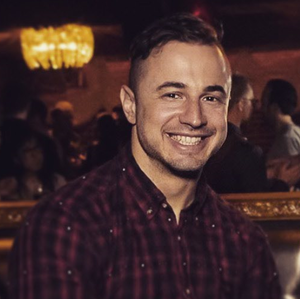
I’ve had the privilege of working, consulting, and interviewing hundreds of successful executives and founders in gaming over the past two decades. They were and are all impressive in their own ways. And when I say that Bekir Batuhan Çelebi is the uncommon amongst the uncommons, I truly mean it.
I highly recommend you watch our interview. I’m sure that I’ve missed much learning from this write-up.
Inside the Turkish Studio Rewriting Mobile Gaming's Rules
Two years ago, Batuhan was raising money, going through personal relationship challenges, and designing levels for Magic Sort at the same time. It was far from the picture-perfect beginning of a startup story. There was no accelerator. No incubator. No VCs. Just the wall and his back against it.
Today, a little over two years later, Grand Games is on a $500M annual run rate, has raised $103M from renowned investors (Balderton, Laton Ventures, Bek with the last two backing since pre-seed), and posted a fivefold revenue increase in the last year alone. That trajectory doesn't exist in mobile gaming right now.
This is how it happened…
The Frustration Thesis
Grand wasn't born from a market opportunity deck. It came from two specific frustrations Grand Games’ founders had with the Turkish mobile gaming ecosystem. First, the top-down founder-dominated culture of most studios felt off to founders. Second, everyone was chasing the sweet Match-3 crown that is still sitting tightly on Dream Games’ head. What they saw was capital, talent, and time being misallocated by Turkish startups who were imitating at scale.
The frustration turned into a grand thesis: craft games that don’t compete directly against the largest titles on the market in an environment that doesn’t grind through talented people.
What the Investors Saw

Grand’s $30M Series A raise was the fastest in Turkiye's history. Lead investor Balderton saw a crowded 70-square-meter office with 20 people working on top of each other, a half-formed culture, and a strategy that was perhaps in action but definitely not on paper. What they backed was drive, conviction, and hunger. I know. Big words. But if you watch our conversation, you’ll understand what the investors felt in addition to the KPIs they were seeing.
Twelve months later, at Series B, the same investors doubled down at $70M. By then, Grand had two successful titles, Match Sort and Car Match, and two more in soft launch. The product-market fit was undeniable. The strategy had proof. And around those two, the culture began forming.
The fact that no new investors came in at Series B is underrated. Existing investors led the next round at a much higher valuation, taking all offered shares. That is a harder signal to manufacture than any press release.
Five studios, 75 People, Total Accountability
Grand’s structure is simple: five autonomous studios of roughly 15 people each. Every Head of Studio owns the full stack: game design, development, and live ops decisions. Nobody asks founders before shipping a feature.
The 15-person squad size is deliberate. Above 20, Batuhan found that it shifts from product management to people management, and the sense of individual ownership evaporates. When there are around a dozen people, every single person feels the product succeeds or fails because of them. That accountability is load-bearing for how Grand operates.
With AI-assisted development and shared code infrastructure, features built for Magic Sort can be ported to a new title in three days. The team is small; the leverage is not.
How Games Get Greenlit
Grand is not a volume publisher. They don’t go through hundreds of prototypes a month like Voodoo or Rollic. Five studios mean five shots that all need to count. The process starts with a pain point: someone plays a game, they like the game, but something feels off, and they can articulate exactly what it is. That gut reaction is then tested against market data from Sensor Tower to estimate whether the market for a fixed game is large enough to matter. If both the insight and the TAM (total addressable market) hold up, they begin to prototype.
The one filter that kills most new game ideas before they start: if there's no impactful differentiation in art, level design, or core product, they don't begin. Making an existing game slightly better isn't a strategy.
Between Car Match at month three and their upcoming title, Grand went roughly a year without greenlighting anything new. That kind of restraint is rare in this industry. Grand employs the sniper strategy in a marketplace where everyone is blasting away with shotguns.
Not a Dream, Nor Rollic, Yet Learning from Both
When asked how Grand compares to the obvious peers, Batuhan's framing was clean. Dream Games is on one extreme: extraordinary quality, measured release cadence, ultimate perfectionism. Rollic is on the other: remarkable volume, machine-like execution, scalable publisher model with dozens of external studios and thousands of attempts every year.
Grand is deliberately neither.
"We’re kinda fast with kinda good quality", his words, not mine. According to Batuhan, they optimize for speed enough to test hypotheses quickly, but refuse to sacrifice too much on quality, as that would give a false signal of the game’s potential. It's a lane that requires discipline to stay in, because the gravity of both extremes is strong.
Who Grand Hires and Who They Let Go
They don't start with the resume. The hiring filter is passion, ambition, and work rate, in that order. And they do have a specific emphasis on whether the candidate plays mobile puzzle games.
Obsession with the specific genre of games is non-negotiable in a company that is fueled by the pain points in puzzle games. The person who loves EA FC or Call of Duty but has never touched a puzzle game is simply a misalignment they've learned to spot early.
The people who didn't last at Grand were those who optimized for their own trajectory over the team's, or whose passion turned out to be an interview performance. "You cannot teach passion. You cannot teach ambition."
The capability gap they're honest about
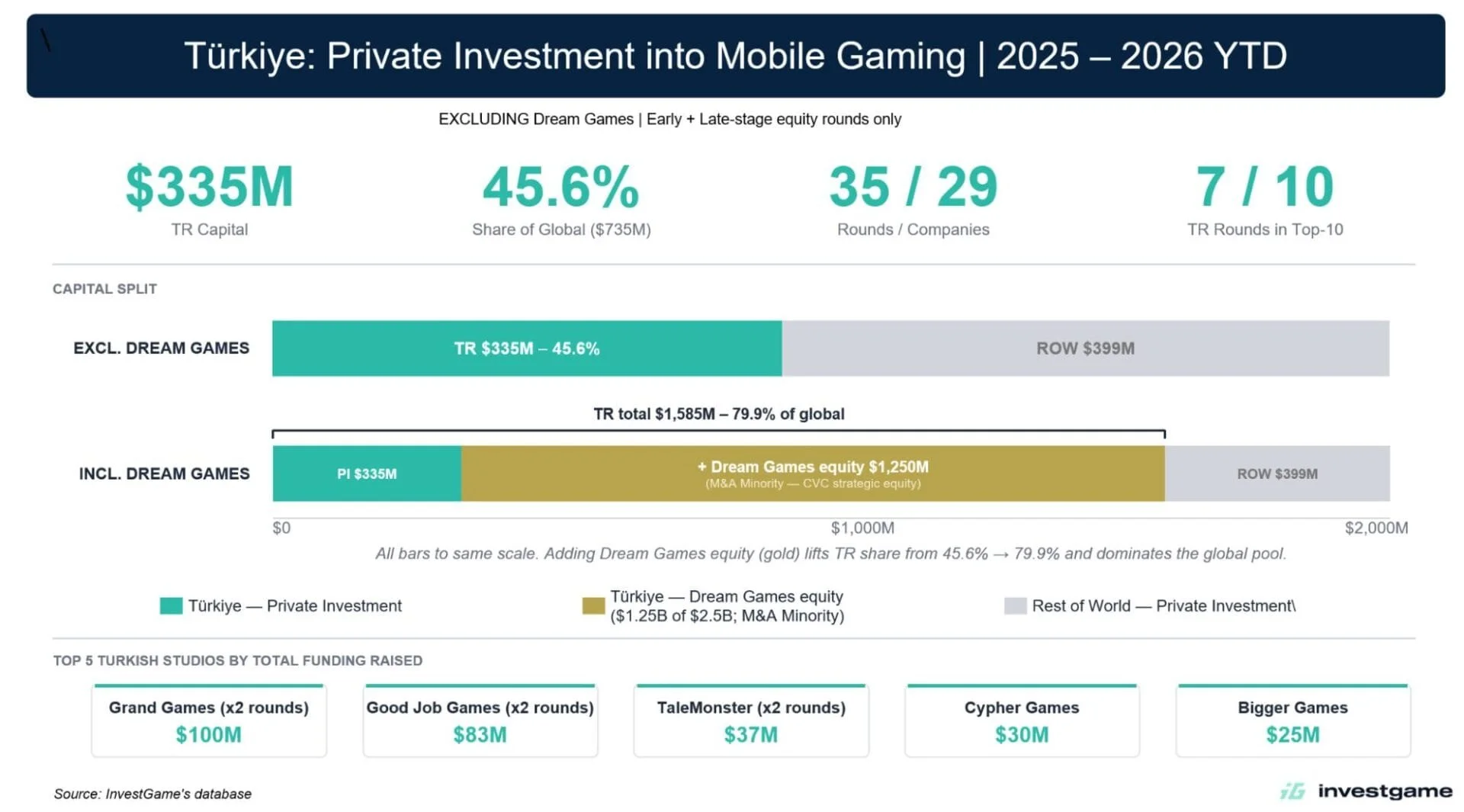
Grand has shipped six games in two years. The muscle of finding both an underserved and a poorly served audience and then building something premium for them is clearly strong. The muscle they know is weak is optimizing a game to its full potential after launch. Or as we like to call it, Live Ops. Long-term retention tuning. Pushing a hit game to its actual ceiling one update at a time.
According to Batuhan's assessment, their massively successful titles are currently under-optimized. AndI’ll be honest, a 12-person team running a game at significant scale is Supercell 2012 energy. It’s for sure admirable for what it proves, but not the full picture of what that game could be at 25 or even 55 people with the right specialization split between launchers and operators.
The structural fix he's working toward: separate the people who are good at building new things from the people who are good at running existing ones, and create deliberate transitions between the two.
This will require a break into the culture they have built. While small squads will remain for new games, I think it’s only a matter of time before squads operating hit titles will turn into platoons with 30 or more people. And that in turn will bring the people management, which Batuhan tries to avoid with small team sizes. It’s an inevitable evolution, but somehow I’m confident that Grand Games will clear it with flying colors.
After all, Batuhan’s vision for Grand includes 10 internal studios, five or six external partnerships or investments. He sees Grand as a regional champion. Acquiring, instead of being acquired. And to be honest, that framing is increasingly common in Istanbul. Dream's liquidity event without a full exit showed the market that independence and financial returns aren't mutually exclusive.
The Turkish Ecosystem Question
Grand is a Turkish company through and through. They have not hired outside Turkey. Nor hired other than Turks. This is typical for Turkish studios that frankly don’t have strong access to an international talent pool despite being located in a city with nearly 20 million people.
On the other hand, small teams working fast require frictionless communication. Lack of language and cultural barriers provide that. And let's also not forget that Turkish mobile talent is among the best in the world right now. Some would say the best, and it would be hard to argue against that statement.
And then there’s the government support layer that is very real and structurally intelligent: 50% subsidies on marketing costs and app store payments to extend runway during the highest-risk phase, tapering off as companies reach scale. It was built by listening to founders, not consultants.
The way I see it, Turkish studios are best equipped to go from zero to one. The challenges emerge when they have to go from one to 100. That’s when the competition for limited talent becomes real. When everyone develops games in Istanbul with all-Turkish talent and almost no outsourcing, capital and hard work alone can’t bridge the gap.
The two pieces of advice he'd give a 25-year-old founder in Istanbul
At the end of our interview, I asked Batuhan what advice he would give to someone like himself. A 25-year-old Turkish founder looking to
First: most of the decisions you will treat as one-way doors are actually two-way doors. The permanent decisions are rare. Stop using life-or-death decision energy on reversible things.
Second: nobody claps for you when you need it most. The applause comes when you've already made it. Build your internal validation system from the jump. Celebrate the hire, the process improvement, the small proof point, because momentum is real and you will need it long before the results arrive.
Batuhan Çelebi is the co-founder and CEO of Grand Games, a Istanbul-based mobile game studio. This is his second appearance on Deconstructor of Fun.