Zynga Founder Mark Pincus: Why Your Favourite Ideas Are Almost Always Wrong
Five lessons from the founders' founder, and how success changes founders
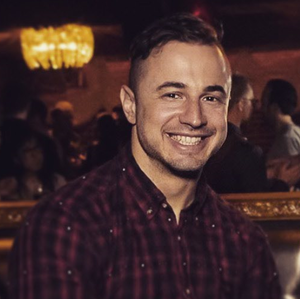
Mark Pincus, founder of Zynga, came on Deconstructor of Fun to talk about his book (Life at the Speed of Play: Launch Products People Love!). Within the hour, he told me he will never sit on a board he doesn't run, that culture is "the dorkiest f*cking thing,". He also said, “f*ck the investors,” making a valid case that they are at the end of the value line, not the beginning. And that spending time pleasing them is time away from executing against why they invested in your company in the first place.
Zynga has a special place in my heart. It launched my career. I played FrontierVille before I ever shipped a game. I knew the legend of Pincus going in. I got the experience that force when I worked at Zynga. What surprised me was how little the legend has softened not only then but even today.
Mark's book, Life at the Speed of Play, is a product management manual from a founder who has done it with outlandish achievements at the largest scale for 30 years. And just like Mark, it’s uncompromising, direct, opinionated, and authentic.
Here are the five ideas from my conversation with Mark that matter most. And for the unfiltered takes, please check out our full conversation on the Deconstructor of Fun podcast (Apple / Spotify).
1. Death comes through a thousand compromises
Pincus took his company Support.com public and still walked away hating it. Every compromise had been rational. For example, he took on an investor everyone knew was “a douchebag”, just for the brand the investor carried. The board seat was traded for the money. This is one of the countless examples and small betrayals that he made until the company he founded no longer felt like his.
"Whatever your weird quirk is, double down on that. You'll repel those you should repel, investors and employees, but the ones you attract will follow you like a religion."
With Zynga, Pincus was adamant about avoiding compromises and keeping his instinctive quirks. He built a model he calls a democratic dictatorship. Everyone fights passionately for their idea, the CEO decides, everyone commits even if they are disagreeing. And anyone who thinks the company is a democracy should go.
If the above sounds wild or toxic, it’s actually how all organizations function in the face of crisis. They elect a leader and grant temporary, delegated, absolute authority. There is free debate until the decision and total commitment after it to ensure execution. Dissent post-decision is treated as disloyalty. Startups are just in a permanent crisis, so the founders’ grant never expires.
"I'm a team player as long as I'm running the team."
The obvious risk of “democratic dictatorship” is a founder nobody dares to correct. His counter is what he calls expert witnesses: the people closest to the data and furthest from the decision. Mark skipped one-on-ones and met leaders together with their teams, so that the voices of “expert witnesses” surfaced.
And if you think this operating model created a bunch of Lemmings, you couldn’t be more wrong. The proof is in the Zynga alumni. Just count the founders Zynga produced. "Be a CEO" was on the wall at the HQ, and a lot of us, myself included, took it literally.
2. Culture is whatever gets the hill taken
Pincus defines scaling as getting people to do the right thing when you're not in the room. The CEO picks the hill. The team picks the path.
The hard part is getting anyone to run at it. His image is a foxhole: your job is to pull people out of somewhere warm and tell them that some of them die taking the hill, but everyone dies if they stay. He calls it the penguin effect. Nobody jumps first.
At Zynga, this showed up as teams shipping small features that held the numbers flat for the quarter, which was rational. His fix was blunt. Every team's mandate had to include one “bold beat”, a feature so big that players say, "I can't believe you did that." A feature designed to create a step change in the game's trajectory.
"Anyone lecturing you about culture has a team rolling their eyes behind them. Culture is whatever the f*ck it took to get them to do the right thing when you weren't in the room."
There's another side. Mandating bold beats is an admission that the metrics machine Pincus built was suppressing innovation, and that only the founder could override it. That's the paradox of his style. The system scales, yet the courage to break the system needs to come from the democratic dictator.
3. “F the investors.” You serve investors by ignoring them.
Mark was very good at product. In his own words, maybe the best player to put on the ice. If that's true, the person who moves the numbers most, spending their week on Zoom calls with the investors and panels at industry events, is a misallocation of the company's scarcest asset. He calls those fake CEO moments, and he puts press in the same bucket unless you genuinely run on PR.
"If you're my investor, I'm not gonna do anything valuable by talking to you. You've already invested. That ship has sailed."
I agree for a product CEO with leverage. Yet a founder raising every 12 to 18 months doesn't get to ignore the cap table, and Pincus conceded as much when I pushed. But there's another exception to the rule. The advice only works if you really are the best player on the ice.
Many CEOs who adopt the "I'm focused on product" mantra are just seeing it as a more comfortable way to avoid the investor conversation they're afraid of. They bet that the product will bring the investors to the table. Sometimes it does. Sometimes it doesn’t, and you run out of runway.
4. Your instincts are right. Your ideas usually aren't.
"Your instincts are right 95% of the time, but your ideas are right 25% of the time, at best."
An instinct, in Mark's framing, is a read on reality. Something true about what people want, whether or not anyone has built it yet. An idea is what you stack on top: the product, the business model, the timing, the technology. The instinct comes from the world. The idea comes from you, which is exactly why it is usually wrong. Killing ideas fast is how you stay close to the truth without abandoning the instinct that got you there.
I pushed on the obvious weakness. At some point, a right instinct with a wrong idea looks exactly like being wrong. He flipped it. The dangerous zone is the B plus. Right instinct, wrong idea, just enough signal to keep going and never enough to win. A wrong instinct paired with a wrong idea is easier to read, because the data goes silent.
His fix is Proven, Better, New. Isolate a proven mechanic like match-3 or tower defense and treat it like a slot machine: copy the machine, get the same dopamine. Better is small and unglamorous. Half the price, fewer clicks, more polish. New is the part founders fall in love with. It gets people to try the product. It doesn't make them stay. And then again, Turkish founders have proven that polishing the existing idea to perfection is yet another path to success.
Nevertheless, I think this is the most useful framework in the book and the easiest to abuse. Every founder with a dying product will relabel it "right instinct, wrong idea." Pincus supplies the guardrail himself. Spend 80% of your time looking for your idea in the wild and 20% on your own. You probably won't invent the aha moment. You'll find it, but only if you're looking.
5. How Pincus almost bought Supercell for $400M
In 2012, Zynga was a $2 stock. Hay Day was eating Zynga's farm on the web and sat at number two on the top-grossing charts on mobile. Clash of Clans had just launched. Everyone at Zynga was playing those two games. By Pincus's account, he had a handshake with Ilkka Paananen to buy Supercell for $400M in cash. A little over a year later, SoftBank bought 51% of Supercell at a 3 billion valuation.
The board said no. They asked him to prove he can manage what he had already bought before buying another company. The OMGPOP write-down was still warm. In his words, that acquisition only wasted 200 million dollars.
Pincus still held voting control. He went to his lawyer and asked what it would take to use it. Fire every board member, replace them with his own people, and expect to be sued personally.
"Elon would have done that. Elon has much bigger balls than I have."
He didn't. By his telling, Supercell cleared $500M in net profit the following year. Then the part that clearly still stings: a year later he handed the company to a golden-resume CEO, who immediately proposed a $550M acquisition of a studio Pincus describes as having no revenue and no hit games, and the same board said: “great, we believe in you”.
Three takeaways he draws from it, and only one is about M&A.
First, know whose lawyer you're talking to. He found out later that the lawyer advising him on whether to fire the board worked for the company, not for him.
Second, nobody stood up. Not one board member broke ranks. He calls it groupthink, and he didn't want to fight that and Wall Street at the same time.
Third, and this is the one that undercuts his own book: when I asked what changed between 2015 and 2025, he didn't name a framework. He said time, lived experience, and reflection. The frameworks were all there in 2012. Proven Better New, expert witnesses, know your goal. What failed was nerve.
"Mark 2012 and Mark 2015 thought he was dealt a bad hand. Mark 2025 thinks it was a great hand. I just wasn't ready to play it."
The 2015 return follows the same shape. He came back with roughly $1.4B in cash and put $800M into buying back stock near $2.20. Take-Two later paid close to $10 a share, so the trade worked. It was also defensive. "I was licking wounds. I was playing defense. I was not my best CEO self." Frank Gibeau, Zynga’s current CEO, went on to build a $12B company. Pincus thinks the hand in his pocket was the biggest game company in the world.
How Success Changes a Founder
The usual story is that success changes a person. They get cautious. They start protecting what they built instead of building what they believe in.
With founders, I think it works the other way. Success doesn't change them. It removes the last excuse for impersonating a professional executive. No board to answer to, no runway to protect, no round to keep clean. What's left is whoever was there the whole time. That's what success actually buys: permission to run the company the way you always thought it should be run, at full volume.
Investors love what unapologetic founders produce and fear the process that produces it. Employees are no different. We all love the idea of cashing options in a founder-led company. Few of us enjoy living inside one.
I guess what I'm saying is: you don't get the outcome without the force, and you can't control the force. That's the trade, and it's non-negotiable.