Questions Istanbul Founders Stopped Asking
What Türkiye built, who built it, and what happens next. I asked Akin Babayigit, and he gave unfiltered answers.
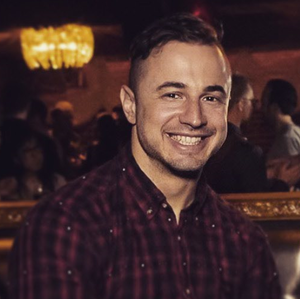
McKinsey. United Nations. Skype. Rocket Internet, for two months. Facebook. King. Tripledot. Now Arcadia. I opened by telling Akin Babayigit that it looks like he can't hold a job. He agreed before I finished the sentence. "I can't hold a job, man. I'm unemployable."
Listen to the full conversation on Deconstructor of Fun
The CV reads like restlessness. Yet up close, it reads like someone who kept walking toward whatever felt alive. He hated McKinsey and said so without softening it. He loved the United Nations until he did the math on what it pays. He went to business school the way other people go on a yoga retreat, to look inward, except he came out with a thesis instead of a mantra. The thesis was tech.
He left Türkiye at sixteen and never moved back. He runs a hundred-million-dollar fund alone, with one institutional LP and his own capital next to it. He is Turkish enough that founders in Istanbul answer within the hour, and outside enough to see the ecosystem the way a foreign LP would. That combination is as unique as Akin’s track record as a founder and an investor.
Sidar Şahin, the ghost who built the ecosystem
Every ecosystem starts with one person who says something insane and then makes it true. In Finland it was Ilkka Paananen. I sat close enough to that to know how much of Supercell's gravity came from one man deciding repeatedly that the ceiling was higher than everyone assumed. In Türkiye it was Sidar Şahin, founder of Peak Games.
Akin's description of him is the best I have heard. A guy who pounded the table in Istanbul and announced he would build the next Google out of Türkiye, back when his English was rough, and the room thought he had lost it. Disorganized to the point of comedy. Lived in the office. Would say ten things in a meeting, and one of them would be an insight you had never considered. And he was not just a believer. His spike was marketing so much so that Adam Foroughi once told Akin that Sidar knew exactly what he knew, which, from the CEO of AppLovin, can be considered a scouting report rather than a compliment.
The receipts are real. Zynga bought Peak's card studio for a hundred million in 2017, then the rest of Peak for 1.8 billion in 2020. Türkiye's first gaming unicorn and a launchpad for the success that continues to compound.
Soner Aydemir worked for Sidar for years and then went and built Dream Games, now valued at five billion after CVC came in. Rina Onur went and built Spyke. Gram, Rollic, Good Job, the whole lineage traces back through the same building.
Here is what I find genuinely strange. Sidar is gone. He does not invest, does not advise, does not sit on boards, does not write, does not appear. He built, scaled, sold, and ghosted everyone so hard that they don’t even know where he lives anymore.
Ilkka blogs, funds companies, teaches in public. Doesn’t just give back. He’s shaping the entire Finnish startup ecosystem. Sidar, on the other hand, is a shadow that walks behind every founder in Istanbul and has not been seen in years. And yet the ecosystem still runs on his operating system. And his legend only keeps growing as more time passes by.
Akin's explanation is that Sidar did not leave behind a method; he left behind a proof. He showed people what was possible in a place where nobody believed it was. That transfers fine without the man in the room. A blueprint outlives its author.
Turkish founders are kind cutthroats
I have spent enough time in Istanbul to notice that Turkish studios will decline to enter the same venue, let alone to sit on the same panel as each other. They are warm and welcoming in a one-on-one setting. But when the conversation turns to their peers, the shit-talking has an edge to it you do not hear in Helsinki, San Francisco, or Shanghai. My read has always been that it is not enough for a Turkish founder to just win. It is super necessary to dunk on your peers also.
Akin traced it to structure rather than character. Turkish tech is imitative because imitation has worked. Demet Mutlu built Trendyol in 2010, and for the next seven years everyone and their mother started an e-commerce company. Sidar did the same thing for gaming.
When you see someone who looks like you winning, the immediate conclusion is not "there are many ways to win"; it is "I will do exactly that." Add a relatively thin layer of world-class talent pool (Turkish companies only from within Türkiye) that everyone is fishing from, and you get a market that behaves like a knife fight.
Sidar's superpower, in Akis's telling, was disarmament. He made you feel special, so dunking on him felt like kicking a puppy. And the warmth in that ecosystem is real, which anyone who has been hosted in Istanbul knows within about four hours of landing. The sincerity and the ferocity live in the same room. That is the part outsiders consistently get wrong about Türkiye. They see one and assume the other is performance.
One trick, executed extremely well
Gram, Peak, Dream, Rollic, Loom. Real exits, real money, and broadly the same casual puzzle game. Is that an ecosystem or is it one trick on repeat?
Akin pushes back, and he has a point. Compare the surface area. Wildlife in Brazil ran a tennis game, a tank game, a MOBA, and a casual game under one roof with different business models. That, if anything, is range.
Turkish studios have gone deep instead of wide. People build what they worked on. Someone who spent five years at Peak is not going to go build World of Tanks. Capital is available for what has already worked. Talent is available for what has already worked. The loop closes.
Two things make that loop tighter than it was:
The first mover advantage is weaker than founders want to believe, and Akin thinks it is sometimes negative. Look at Microfun scaling a merge-two game in China at a level nobody thought possible with a mechanic that was not new. New mechanics that leave room for our execution get executed.
Second, to win on mobile you have to win on iOS, and to win on iOS you have to win on AppLovin. That is not a channel; that is a dependency. The algorithm rewards originality and clean execution; it has changed materially in the last year, and if you cannot scale there, you cannot scale at all. Full stop.
Payback is for suckers
The most useful thing Akin said had nothing to do with Türkiye, so I am giving it its own section.
Stop running your studio on payback windows. Payback is a conservative instinct that gets dressed up as discipline. It optimizes for how fast you get your money back, which is a survival metric, not a value metric. Match three breaks even somewhere between eighteen and twenty-four months and still prints phenomenal IRR (internal rate of return), because the tail is enormous. A cohort you acquire today keeps paying for five years. If you manage that game to a six-month payback, you will systematically underspend on exactly the users worth having, and you will lose to the studio that did the other thing.
IRR thinking is a balance sheet privilege. At a thirty-dollar CPI on a Series A raised at thirty to fifty million, patience is how you die. You cannot wait two years for a cohort to mature when payroll is next Monday. This is exactly why Akin partnered with General Catalyst on UA funding, and why Superplay and others graduated from startup to scale-up on that kind of capital rather than on equity.
So the modern game has two halves. Build the machine, then secure fuel that does not run out, because tomorrow's CPI is always higher than today's. Most founders obsess over the first half. The ones who scale have solved the second.
*Learn more: The Good, The Bad and The Ugly of UA Financing
The part Akin cannot say, so I will
There is a structural reason the Turkish machine keeps producing puzzle games, and it is not a failure of imagination. It is policy, and it is good policy.
I went through the updated Turkish incentive scheme in our newsletter earlier this year. As of January, the Ministry of Trade covers:
Half of a studio's overseas user acquisition spend and up to seventy percent in target markets, to a ceiling above a million dollars a year per company.
Pays back around 455 thousand a year against platform commission, which is half of what you hand Apple and Google.
Refunds half the cost of the picks and shovels, the analytics stack, the attribution tools, the cloud.
Subsidizes headcount, with meaningful monthly rebates per employee (up to ~$2,050 per month) and a notably larger one for overseas hires (up to ~$5,690 per month).
Read the list above again as a founder. The state is covering building, testing and soft launching. It is covering the part where a new game either finds a cohort or dies.
It is a machine that lowers the cost of a shot on goal. The Turkish government is designing subsidies around what actually works, based on what game companies told them, rather than inventing a scheme in a ministry and hoping studios show up. Almost nobody else does that. Kudos!
What it adds up to
A few months ago, Deconstructor of Fun ran a fireside event in Istanbul. Room full of founders, most of them making puzzle games, and Akin told them to look beyond puzzle games. He is not down on Türkiye or games. He invests there because the best talent in the country walks into gaming studios.
He simply pointed out that the top of the class at MIT goes to an AI lab. The top of the class at Tsinghua goes into robotics. All while the top of the class in Türkiye goes into mobile gaming. Is that the best allocation for talent from a country perspective?
The proofs that it can go elsewhere already exist. Layer AI out of Gram, Insider, Trendyol, fal. They are still exceptions, and exceptions are how blueprints start.
He also admitted that he cannot fix it alone. He has a hundred million dollars and a mandate that reads: games and tools for the game industry. After eighteen months and several high-profile investments, he is still sitting on half of it. Ask him whether Arcadia is still a gaming fund in five years, and he will not say yes. And I get it. It's a tough gig to be talking about day seven retention all the time when the world is transforming around you with AI, all while gaming multiples have collapsed and Epic’s Tim Sweeney calls it Crash 2.0.
What I love about interviewing Akin is his refusal to manufacture meaning after the fact. I have watched many founders do exactly that, pointing to players who met in their game and got married. True, lovely, and still not why anyone built and scaled a free-to-play company. Akin is honest almost to a fault and rejects the retrofit. He built a game company, and he invests in gaming, because he is good at it and because it works and pays off.
Which is the whole thing, really. Türkiye's constraint was never talent, capital, or hunger. A generation of exceptionally capable people found a proven way to win, inside a system that pays them to keep winning that way, and stopped asking whether it was the way they wanted. That is not a failure of ambition. It is what rational people do when the incentives are that clear.
I don’t think Sidar's real gift was puzzle games. I think it was permission to attempt something absurd. And despite my eternal love for the gaming industry, I agree with Akin. More talented founders in Istanbul should focus on something other than crafting the next Pixel Flow or Royal Smash.