Sort Puzzles: How a New Subgenre is Born
Written by Ahmetcan Demirel, a true puzzler who plays, analyzes, builds and ships puzzle games.
Sort Puzzles have been around for years, occasionally breaking into the top charts but mostly living in the genre’s “other” bucket. They could attract installs, sometimes at scale, but consistently failed to turn that attention into meaningful IAP (In-App Purchase) revenue.
That changed with the rise of Hybridcasual Puzzles: Games that could buy cheap installs like Hypercasual, yet monetize committed players like Casual Puzzle titles. Since then, the Sort subgenre has been in constant motion, with new entrants pushing design forward and forcing faster evolution than ever before.
The Years Before the Sort Puzzle Boom
Before Hybridcasual hits like Block Jam 3D or Hexa Sort, the Sort market was essentially a one-trick pony: Water Sort. Same promise every time. Move water or balls between containers until each color is neatly grouped.
And this wasn’t the polished Water Sort you see today in games like Magic Sort. Early versions were extremely basic, featuring a bare-bones UI, with almost no visual flair, and production values that screamed “template.”
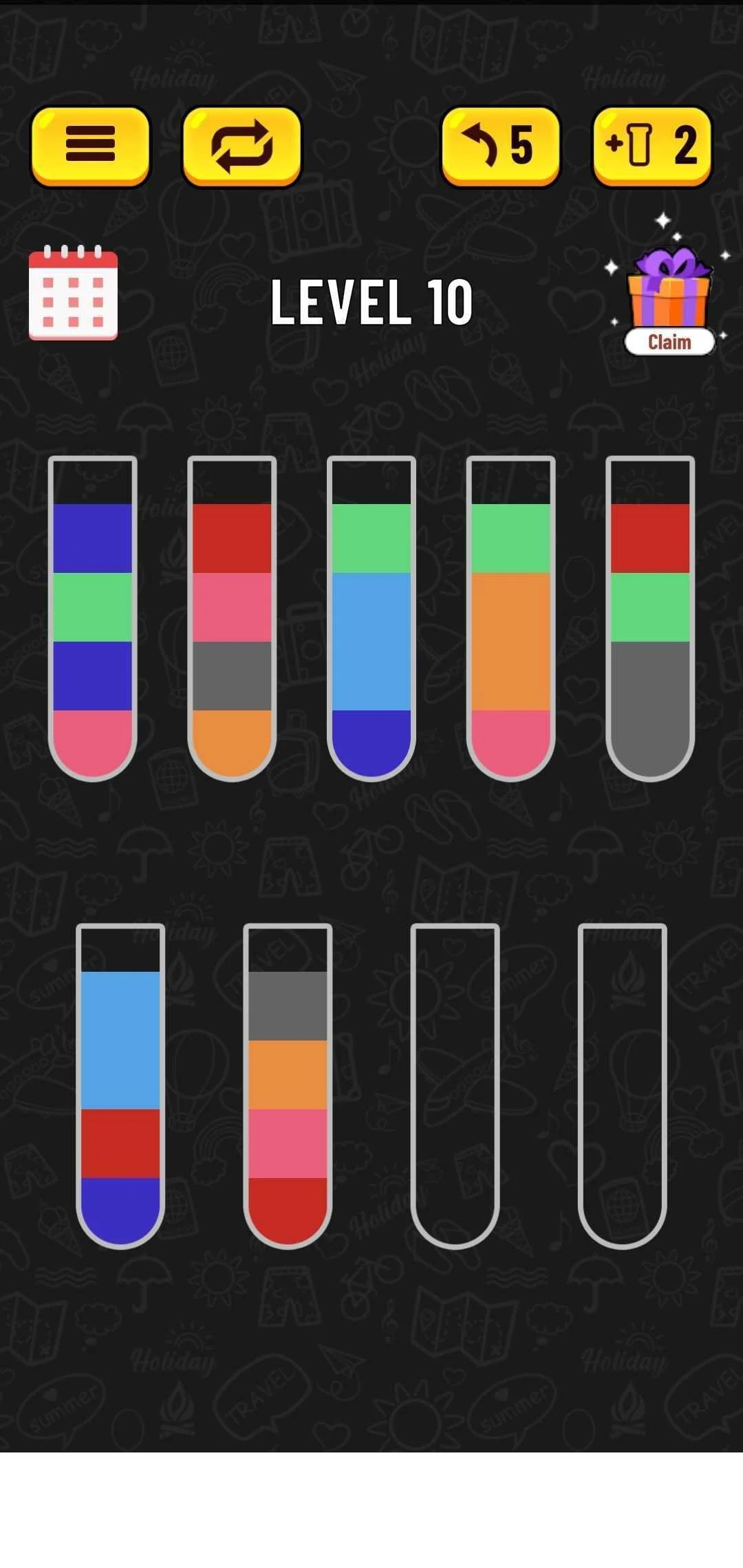
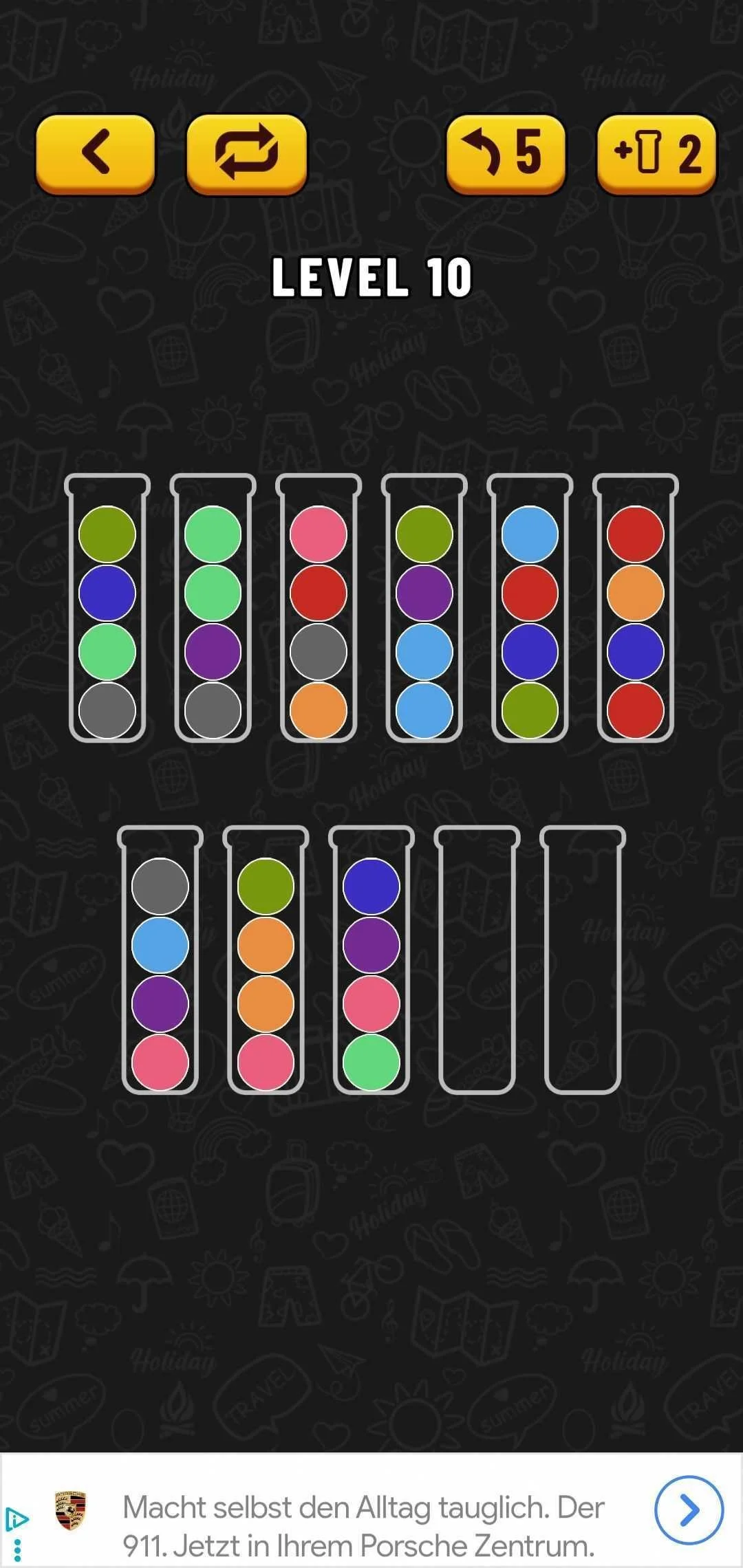
This is how the most downloaded Sort games looked like until 3 years ago…
This isn’t ancient history either. Up until 2023, those ultra-simple Water Sort games were effectively the entire Sort category. Even the once in a lifetime boost from lockdowns didn’t change much. More players showed up, but the market itself barely evolved.
The business model followed suit. Little to no sustainable IAP, heavy reliance on ads. That could still work: cheap users, quick sessions, enough video views, and you can print money at scale, but the ceiling is low. As a category, Sort Puzzles were collectively generating under $2M a year. Just enough to exist, not enough to matter for larger players.
Block Jam 3D, or When Sort Started to Matter
I think 2023 is the year Hybridcasual Puzzles stopped being a collection of isolated experiments and became a real market. That’s when most of the early winners either began scaling seriously or moved from soft tests into full production. Sort Puzzles sit right at the center of that shift, because 2023 is also when the category stopped being “just Water Sort” and became a playground for new mechanics and business models.
The clearest example is Block Jam 3D. It was the first Sort-adjacent puzzle to prove that a game could meaningfully combine IAP and IAA (In-App Ads), provided the core mechanic was genuinely fresh, and LiveOps kept the content flowing. The game launched in spring 2022, but real scaling didn’t begin until 2023. When it did, the IAP traction followed almost immediately.
At its peak, Block Jam 3D was making +$2.5M/month on IAP revenue. Pretty impressive for a game that also has significant IAA revenue.
From a design standpoint, Block Jam 3D introduced a critical constraint that also became its biggest differentiator: the limited dock area at the bottom of the screen, borrowed from Match 3D. With only a few slots available, players are forced into real decisions. You can’t keep everything “in progress” forever, which creates constant tension.
Above that dock sits a board that, at first glance, echoes Water Sort. You’re still untangling colors and grouping like items. But the shift to a two-dimensional board fundamentally changes the game. Water Sort is effectively one-dimensional, gated by vertical stacks and container limits. Block Jam 3D explodes the decision space by adding more paths, more sequencing, and more “what does this reveal next?” moments.
Block Jam 3D and its level layout that changed the Sort market.
That jump isn’t incremental. It’s the move from simple cleanup to puzzles where planning actually matters. And the game didn’t stop there. As we discussed previously, it added item generators, which added dynamism to what had traditionally been a static, pre-determined genre. Instead of showing the entire puzzle upfront, new items are drip-fed as progress is made, turning retries into variable experiences rather than rote repetition.
The rest of the package reinforced the shift. Cleanly implemented boosters and obstacles created friction points worth monetizing. Players had reasons to get stuck, reasons to care, and reasons to pay to smooth the experience. By the end of 2023, Block Jam 3D had done something the category never really managed before: It proved that Sort Puzzles could support IAP at a level worth taking seriously.
The Hexa Sort Years
While Block Jam 3D was paving the way for the Sort market, an even bigger success was being built in parallel: Hexa Sort. It was released in 2023, right when Block Jam 3D was in full throttle, but it really found its footing in 2024 and then owned the year.
Hexa Sort’s monthly IAP revenue peaked at $4M and it has been doing around $1.5M/month on a steady pace for a while.
The interesting part is, the game did not win by being complicated. It won by being simple in the right places, and flexible in the places that matter. The first obvious advantage is the board itself. Hexagon tiles are basically the best possible geometry for dense interconnectivity. You get more adjacency and more routes without making the map look like a mess. That alone gives Hexa Sort a stronger foundation than most Sort boards.
The second pillar is where it really breaks away from old Sort games. Hexa Sort sorts items automatically instead of asking players to do every step manually. That removes friction, speeds up the feedback loop, and makes the game feel much more satisfying, because the puzzle is constantly resolving itself. You place something, the system reacts, and the board gets cleaner in a way that feels earned.
This is also where Hexa Sort quietly buys itself more design space. When your puzzle auto-solves the small stuff, you can push complexity without exhausting the player. You are not stealing mental bandwidth with chores. The player can spend their attention on the real decisions you put in front of them, instead of babysitting transfers.
Just decide where to put the next item and Hexa Sort will figure everything out for you!
Then comes the third pillar, and this is the one the Sort market was not ready for: Spawning items. Up to this point, Sort Puzzles were mostly static, which we talked about before. You could see the whole state, plan around it, and retries were basically the same puzzle again. Hexa Sort uses a highly efficient hex board, automates the sorting, and then injects dynamism by spawning new items for the player to place. That one addition turns the game from “solve this setup” into “survive and manage the board”.
So you end up with a very convenient geometry, an even more convenient automation layer, and a spawn loop that injects dynamism. That combination is a big part of why Hexa Sort hit so hard. It also carved out its own lane inside the Sort market. Not just “Sort”, but “Hexa Sort” as a sub-category, where several games found success at different scales.
And of course, the real problem every clone had to solve was the transfer algorithm.
If you played Hexa Sort, you know the game tends to execute the most beneficial sort action after you place an item. That is not a trivial feature. It means that on every placement, the game has to read the board state, detect every possible move chain, compare outcomes, and pick the best one to execute. Do that fast, do it consistently, and do it in a way that feels fair.
That is why the auto-solving mechanic is not just “nice UX”. It is the system. It is the engine. It is the moat. And any game targeting the now red hot “Hexa Sort” sub-market has to nail it.
How Magic Sort Became the Exception to the Hybridcasual Rule
To be frank, after seeing how versatile the Sort market looked at the end of 2024, I was not expecting 2025 to be the year a Water Sort game took the crown. Then Grand Games showed up with Magic Sort and basically dared the category to think bigger. Stick to a proven core, wrap it in premium visuals, ship strong levels, run a tight LiveOps calendar, and you can clear $40M+ in your first year.
Magic Sort already generated more than $40M in its first year and it doesn’t look like it is going to slow down anytime soon.
If you have even a slight interest in the puzzle market, which I guess you do since you’ve read thus far, you’ve seen the “Dreamification” of Turkish puzzle developers. Royal Match did not just win as a Match-3 puzzle, it trained an entire ecosystem’s taste. Color palette, UI style, juice, the whole look. Hybridcasual Puzzles were the exception for a long time, because most teams in that space do not have the timeline or the bankroll to chase that level of polish.
That is exactly why Magic Sort felt like a category shift. With a $30M Series A, Grand Games had the runway to build for the long term and play the “pure-IAP game”. They took a Sort mechanic that lives in the ad-heavy world and packaged it like a top-shelf Casual Puzzle.
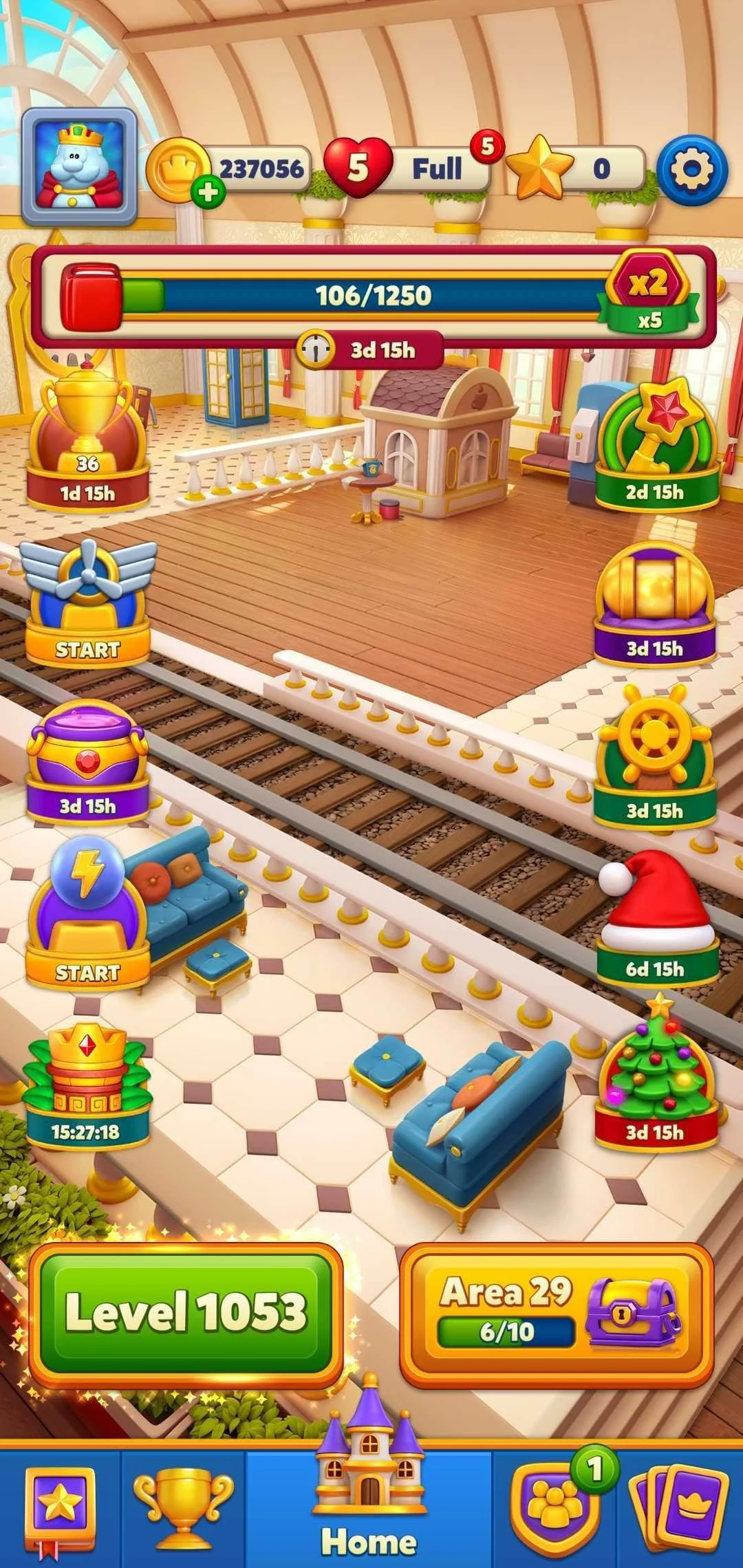
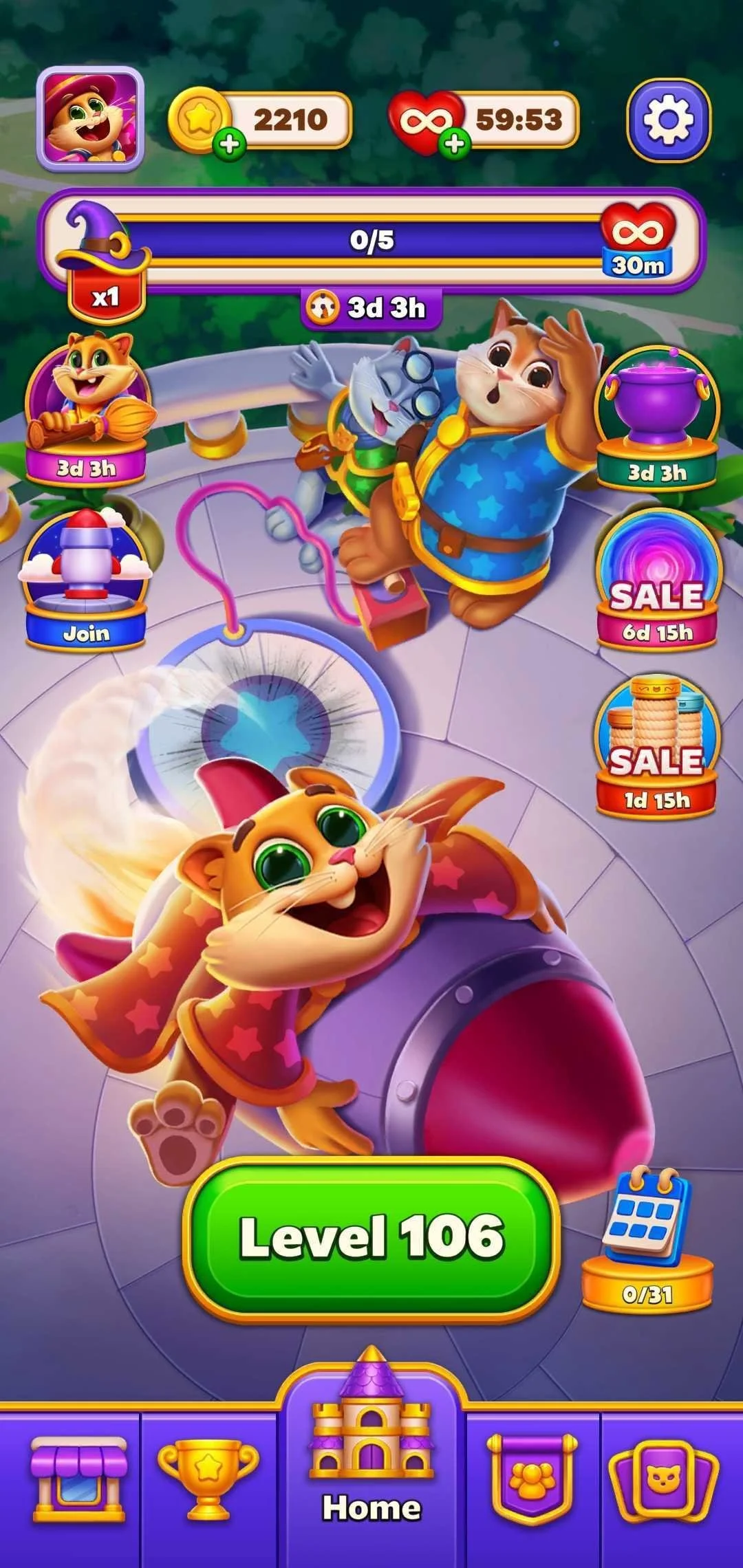
Magic Sort just needs a few more events and offers to look almost the same as Royal Match…
And yes, Magic Sort is the only game mentioned in this article that is not a Hybridcasual Puzzle. It is a Casual Puzzle game using a Sort mechanic, but it aims for a pure-IAP business instead of defaulting to the usual IAP plus IAA mix. That is a tough nut to crack in Sort, but Magic Sort pulled it.
Gameplay wise, it is not doing anything revolutionary versus other Water Sort games. Obstacles are there, the funnel is paced, the presentation is clean. The real story is that it sells the experience as premium enough to scale on purchases, while still pulling serious volume on the downloads side.
My bet for 2026
The Sort market is still nowhere near consolidation. We do not have “the one mechanic” that everybody agrees on. We have a handful of proven pillars, and a constant stream of new entrants trying to earn a spot next to them.
Hexa Sort, Block Jam 3D, and even Water Sort will stay popular choices. They are already validated, they already have multiple winners, and they are familiar enough for teams to ship fast. But I think 2026 adds a new name to that list, and it won’t look like another variant of “move items from A to B”. It will look like conveyors wrapped around pictures.
Pixel Flow and one of its “picturesque” levels.
Pixel Flow introduced this super dynamic structure into Hybridcasual Puzzles last October, and the number of conveyor based Hybridcasual Puzzles has been climbing ever since. Yes, Pixel Flow also uses the blast mechanic from This is Blast. No, I do not think that is the core reason it is winning. If anything, the market already told us that “just clone This is Blast” is not a reliable plan. Pixel Flow already moved past that baseline while This is Blast clones have not been able to produce a meaningful hit.
The real core experience is the conveyor. A constantly moving loop around an artwork made of pixels. The player’s job is not to micromanage the board, it is to pick which blaster to send. The rest is handled by the system. That is the same auto solve principle that made Hexa Sort feel so scalable, just expressed through a different flavor of motion and pacing. It feels fast. It feels alive. And it does not overwhelm the player because the game is doing the heavy lifting in the background.
Then there is the part most teams will copy first for the wrong reason: The picture in the middle. It is not just “more flavor”. It is a UA weapon. Pixel Flow does not need to rely on lining up items and dropping them from below like This is Blast. It can sell every level as a picture you are destroying. That framing is instantly readable in ads, and it gives the game an endless supply of creative variations.
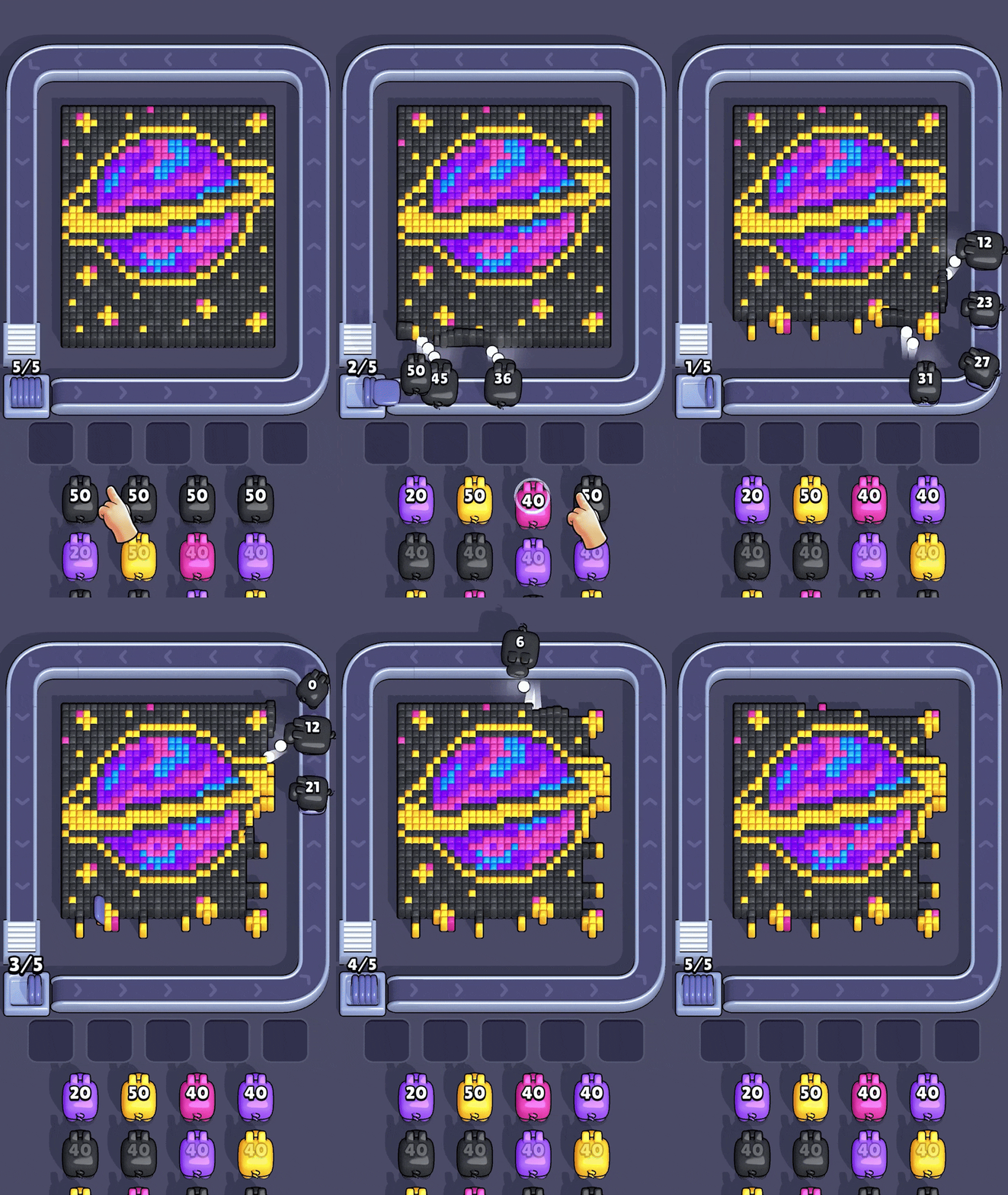
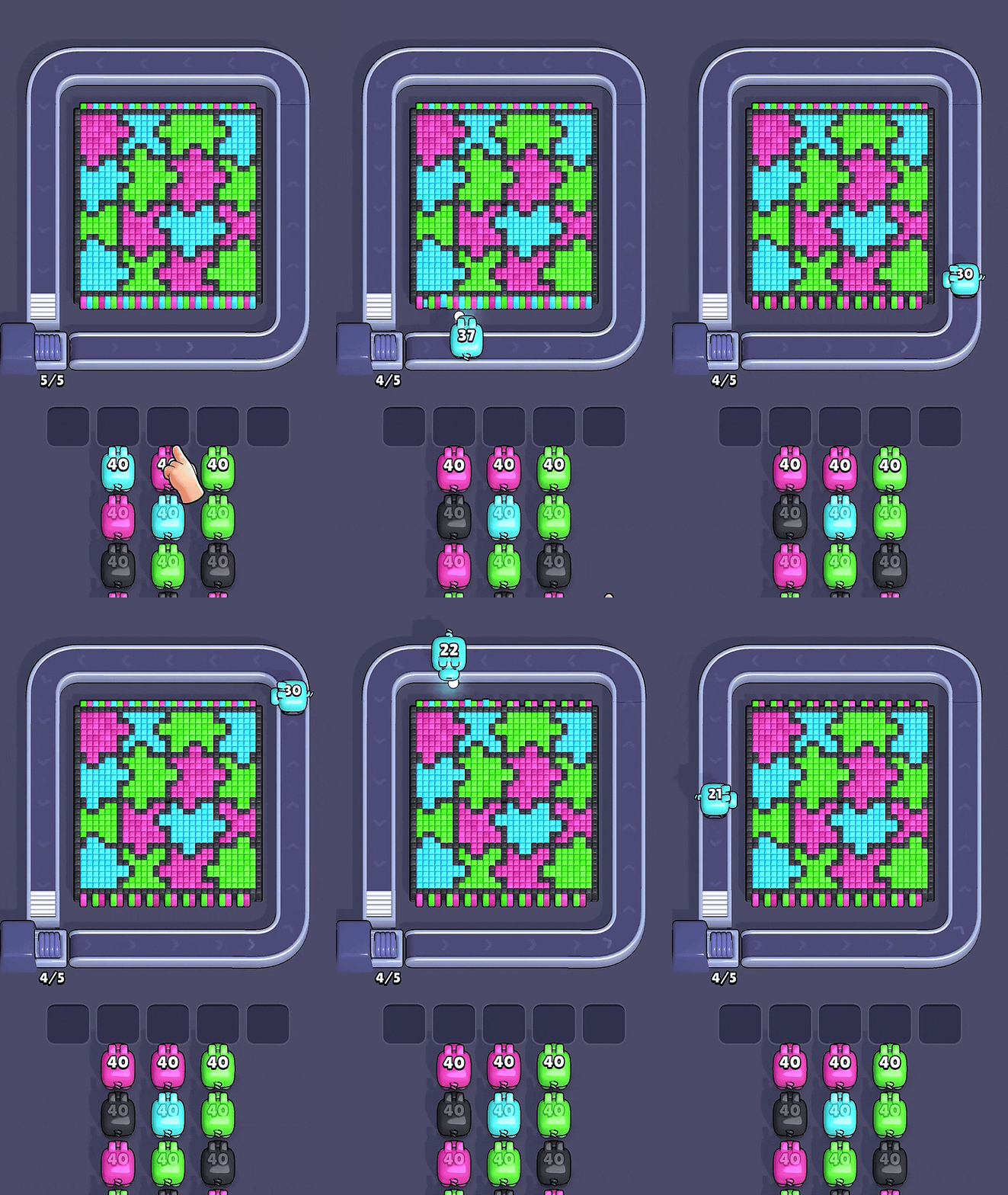
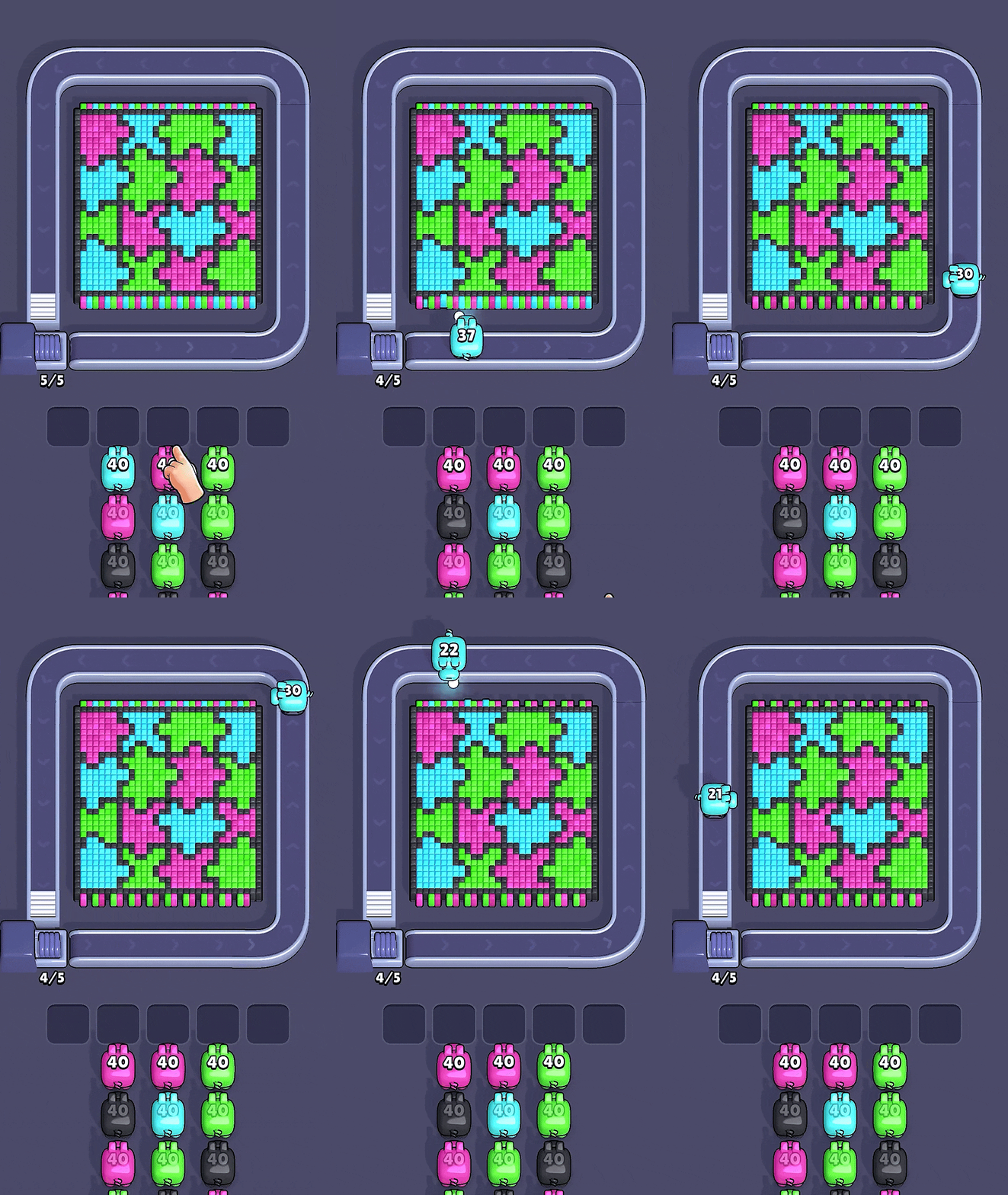
Top creatives from Pixel Flow all focusing on the artwork in the middle of the level board.
When you look at the creatives that work well, a bunch of them are basically “new artwork, same mechanic”. Some of those artworks are not even in the game. That sounds lazy on paper, but it is brutally effective in practice. As long as the game presents a picture-like target made of pixels, the team has a cheap, consistent, and proven creative engine.
And the market did not hesitate. We already have a couple Pixel Flow clones showing relatively impressive early success. Maybe they fade. Maybe one of them sticks. But I am confident about the bigger point: The “artwork surrounded by a conveyor” structure is going to keep making waves. If I have to pick one candidate mechanic that could dominate 2026 for Hybridcasual Puzzles, that is my bet.