Hay Day With a To-Do List: How Focus Friend Cracked Productivity Retention
Apps have taken over as the IAP driver on App Store. They must be doing something right. We here at Deconstructor of Fun are here to share the insights. This deconstruction is from our consulting partner, Vin.
Focus Friend & Progression
Productivity apps are a crowded, unforgiving category, where most products struggle to retain users beyond the first few weeks. Against that backdrop, Focus Friend’s breakout is unusual. Since launching five months ago, the app has crossed 2 million lifetime installs, reached #1 in the iOS Productivity category, and was named a Google Play App of the Year (Productivity) in 2025 - signals rarely seen in a mature category dominated by incumbents.
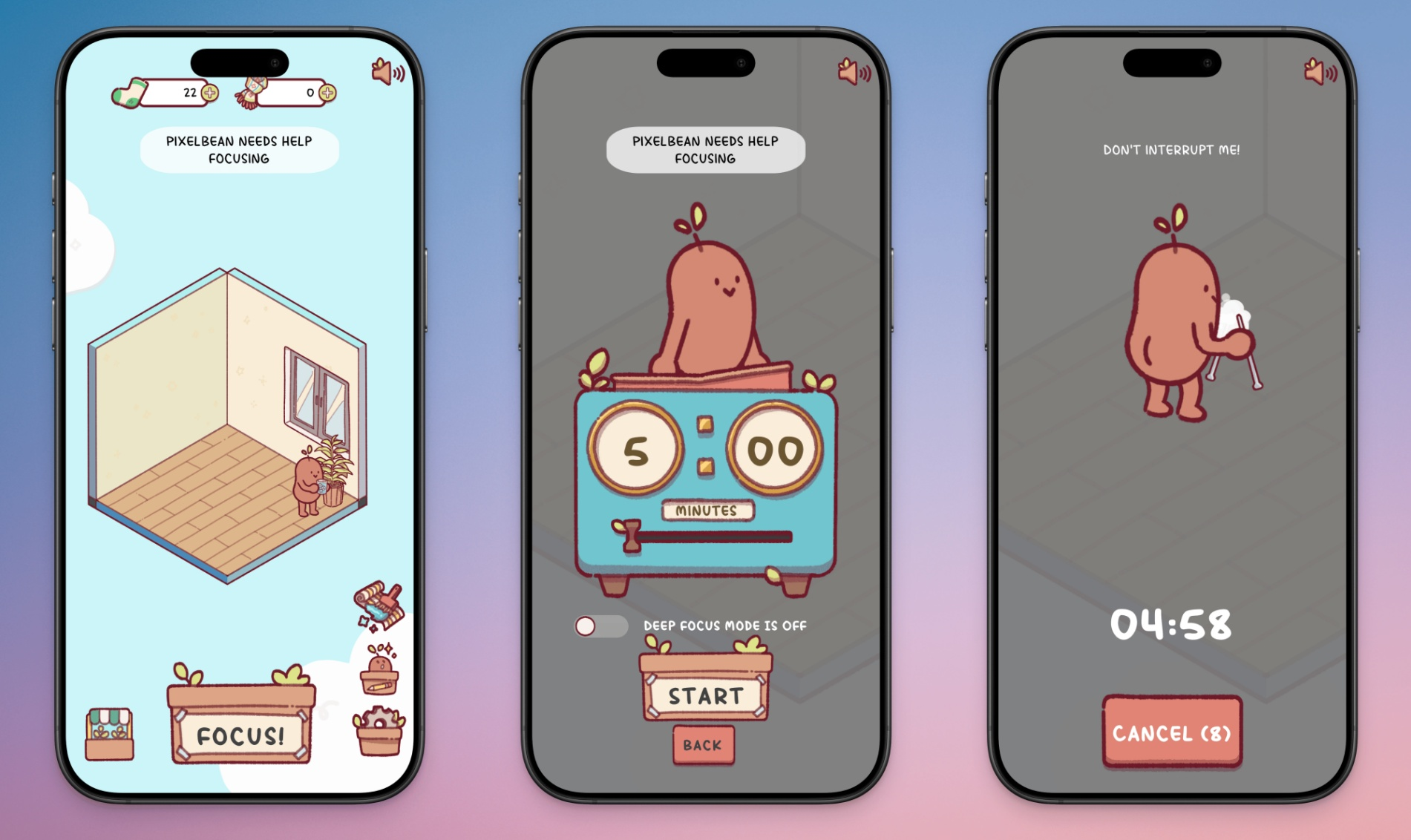
Focus Friend is an app that motivates you to do deep-work. You get rewards that build a house.
How did Focus Friend break through? It made progression the core of the product, using a persistent, visual system more commonly found in free-to-play games than productivity tools. Its core instincts can be traced to titles like Hay Dayand Gardenscapes, where long-term engagement is driven by visible, cumulative investment.
Progression works in Focus Friend because it taps into an intrinsic human need for competence and mastery. By converting deep-work sessions into a growing set of cozy living quarters for a virtual companion, the app turns effort into tangible progress, motivating users to stay invested over time. Early third-party reports suggest Focus Friend’s D30 retention exceeds 30 percent, well above typical category benchmarks.
In this article, we examine the five mechanics that power Focus Friend’s progression system and outline the broader takeaways for teams building both games and non-game apps.
Focus Friend’s Five Progression Mechanics
Mechanic #1: Progression Currency
Completing deep-work blocks in Focus Friend rewards an in-game currency: "socks".
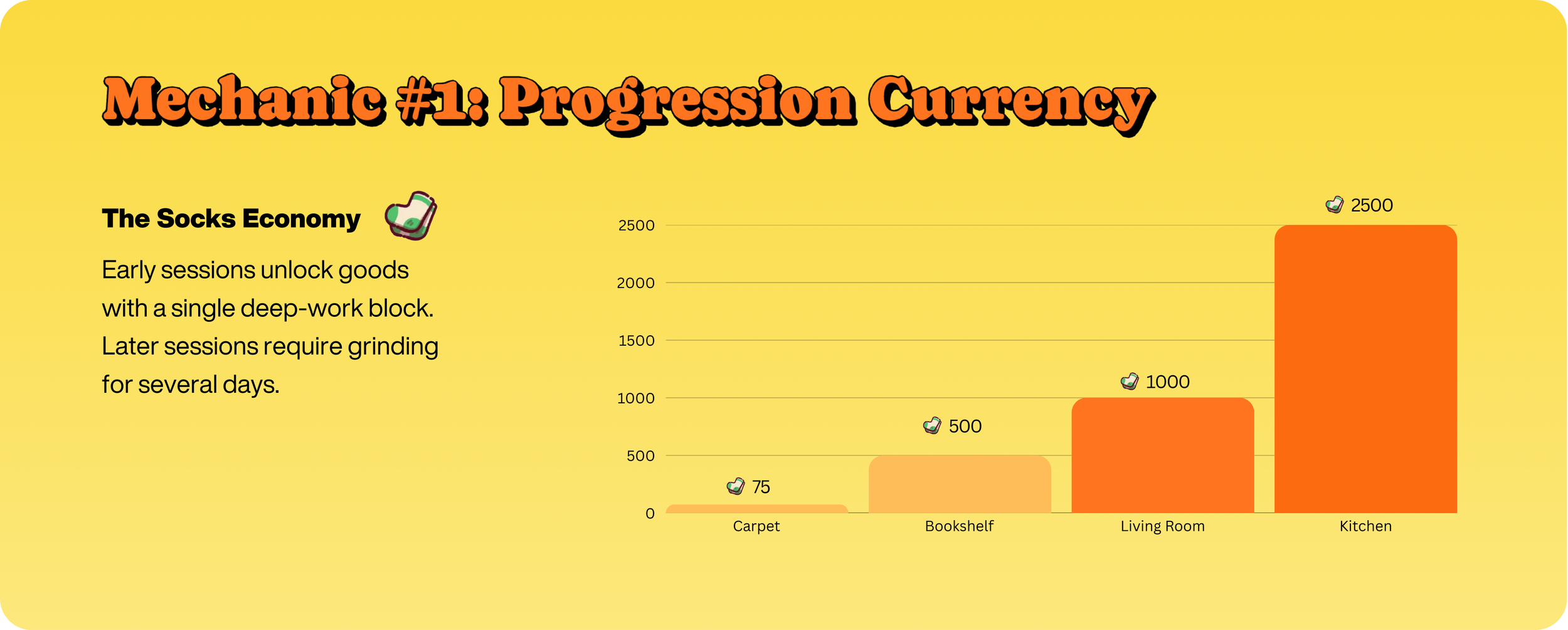
Socks is the primary currency to unlock progression in the app: you must spend currency to build a beautiful home. Focus Friend could have easily gifted users digital items directly, rather than currency. The choice enables two key unlocks: (i) provide user choice in how to decorate / build; (ii) scale up / down rewards depending on the length of your deep-work session. Currency also gives developers a key tool: economy balancing levers. Early purchases take a few hundred socks, while mid/late-game building takes thousands of socks. Easier progress early; more challenging progress later.
Mechanic #2: Personalization
Focus Friend has the key elements of an "invest & express" game. Users “invest” in building by playing the app and earning currency, and “express” themselves by beautifying their digital space. A deep part of the appeal is personalization; you become emotionally invested in this space because it reflects your aesthetics and choices over time.
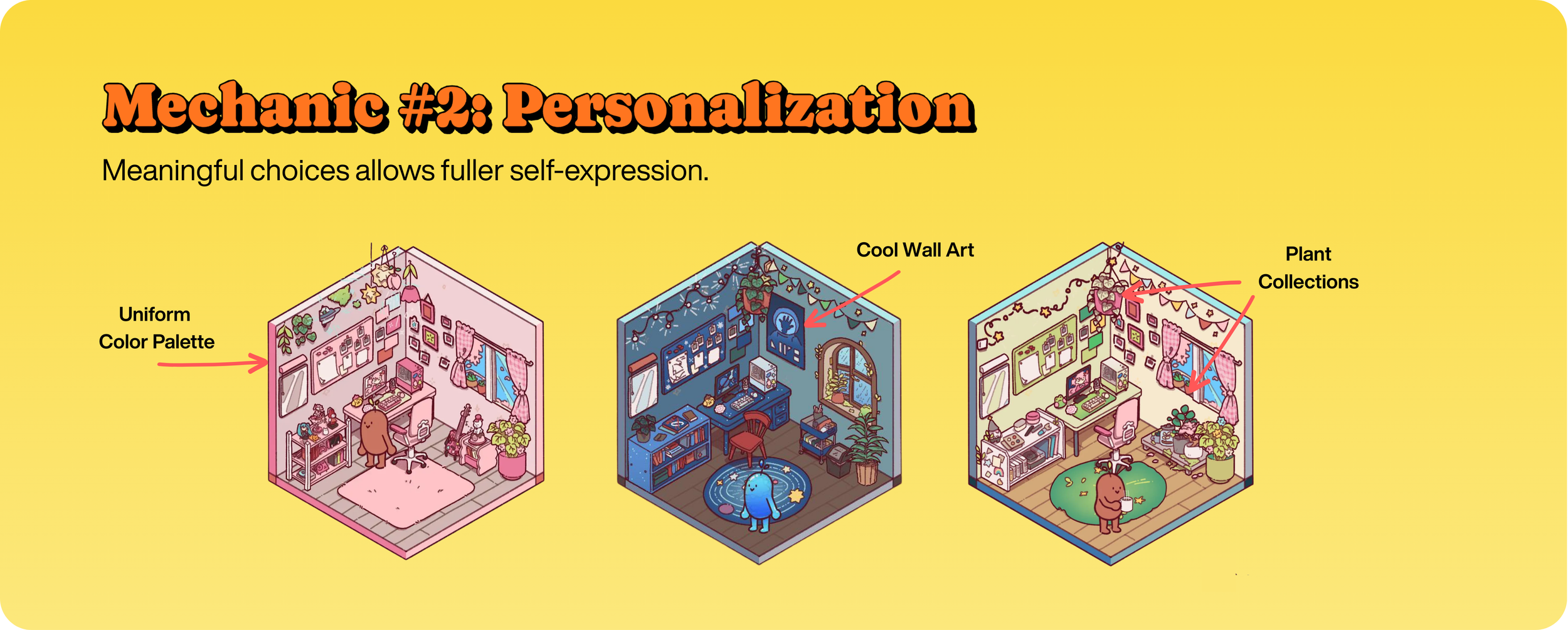
Focus Friend has users designing an office room first, choosing work desks, office plants, wall art, shelving, and on and on. The cumulative sum of these personalization choices transforms progress from achievement into identity. Abandoning the app does not just mean stopping a habit; it means leaving behind a world you curated. That emotional cost is a powerful retention force (loss aversion), common in game design but a rarity in productivity tools.
Mechanic #3: Expansions
Focus Friend's progression extends beyond decorating a single space through room expansions that unfold over time.
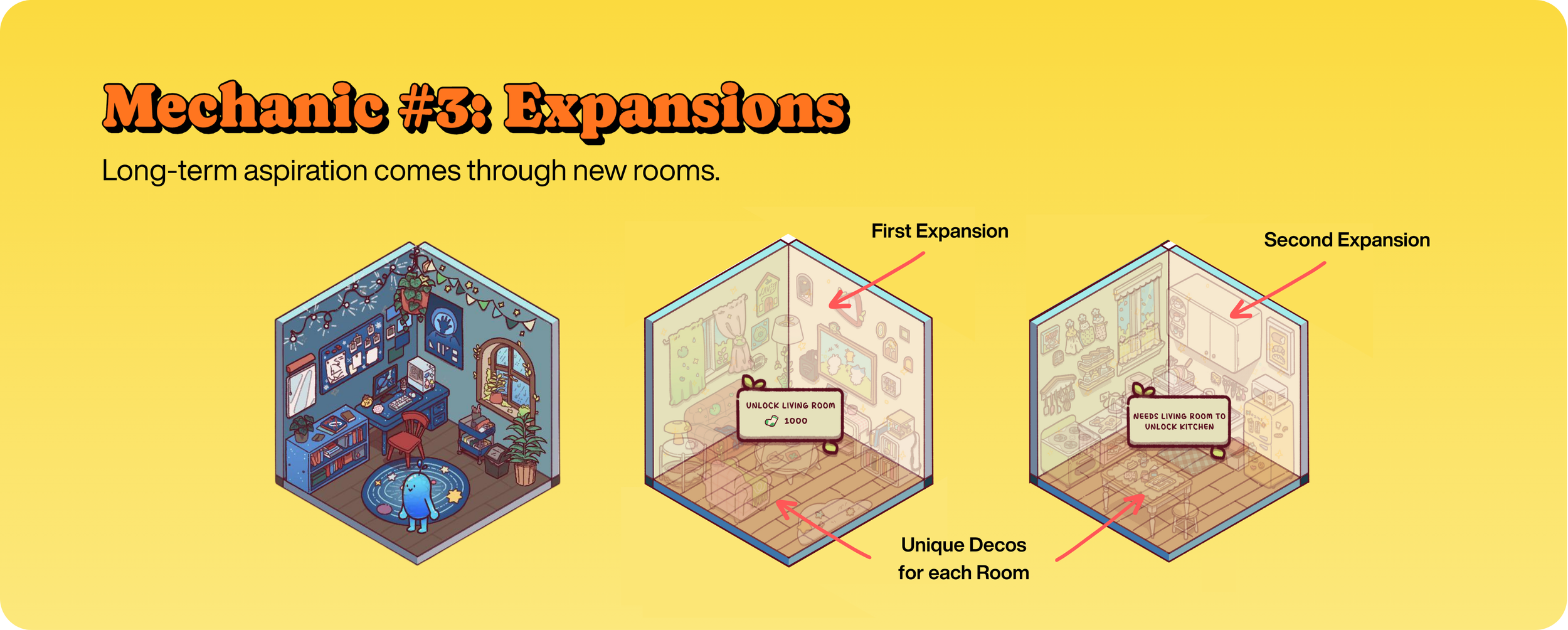
Users begin with an initial bedroom or office, then unlock additional rooms - most notably a living room, followed by a kitchen - each requiring substantially more currency than prior upgrades. This escalating cost structure ensures expansions feel earned, not incidental, turning them into clear long-term milestones rather than routine unlocks.
Each expansion introduces a distinct thematic set of goods. Living rooms emphasize comfort and leisure - wall clocks, end tables, loveseats, coffee tables; while kitchens unlock functional domestic elements such as cupboards, dish racks, sinks, and stoves. Focus Friend transforms decoration into a multi-month journey, borrowing a proven free-to-play builder pattern and applying it with restraint to sustain engagement without overwhelming the core habit.
Mechanic #4: Freemium Monetization
To monetize, Focus Friend borrows liberally from freemium mechanics.
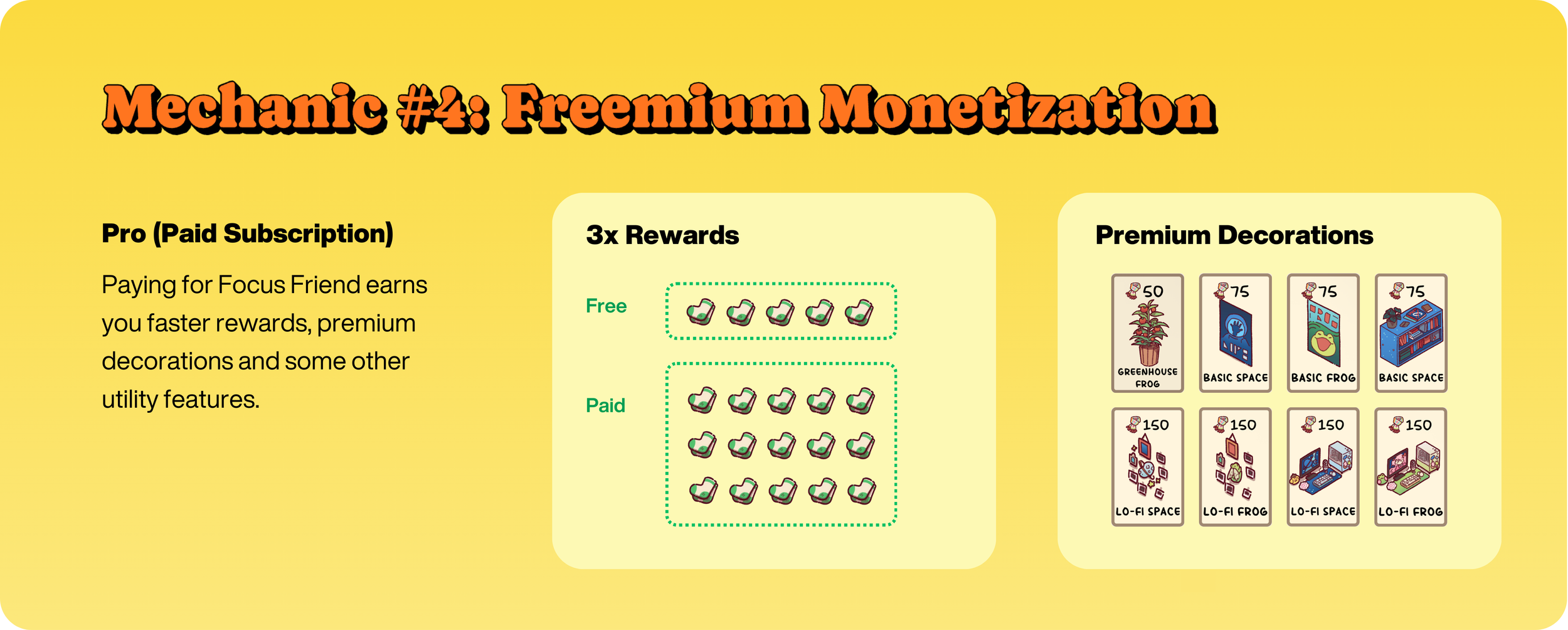
Premium paying subscribers earn currency at 3x speed, accelerating progress. Progression gates added for free users are eased for paid subscribers. Paid users also gain access to premium decorations and cosmetic enhancements (exclusive furniture pieces, rare décor themes) that are not available to free users and help personalize the environment more richly.
By accelerating progression rather than bypassing effort, the model aligns revenue with commitment: users pay to engage more deeply with the progression loop they’ve already bought into, not to shortcut it. This reduces the risk of pay-to-win resentment and reinforces the psychological value of earned progress.
Mechanic #5: Character & Environmental Interactions
A core pillar of Focus Friend's design is the animated "Bean" character.
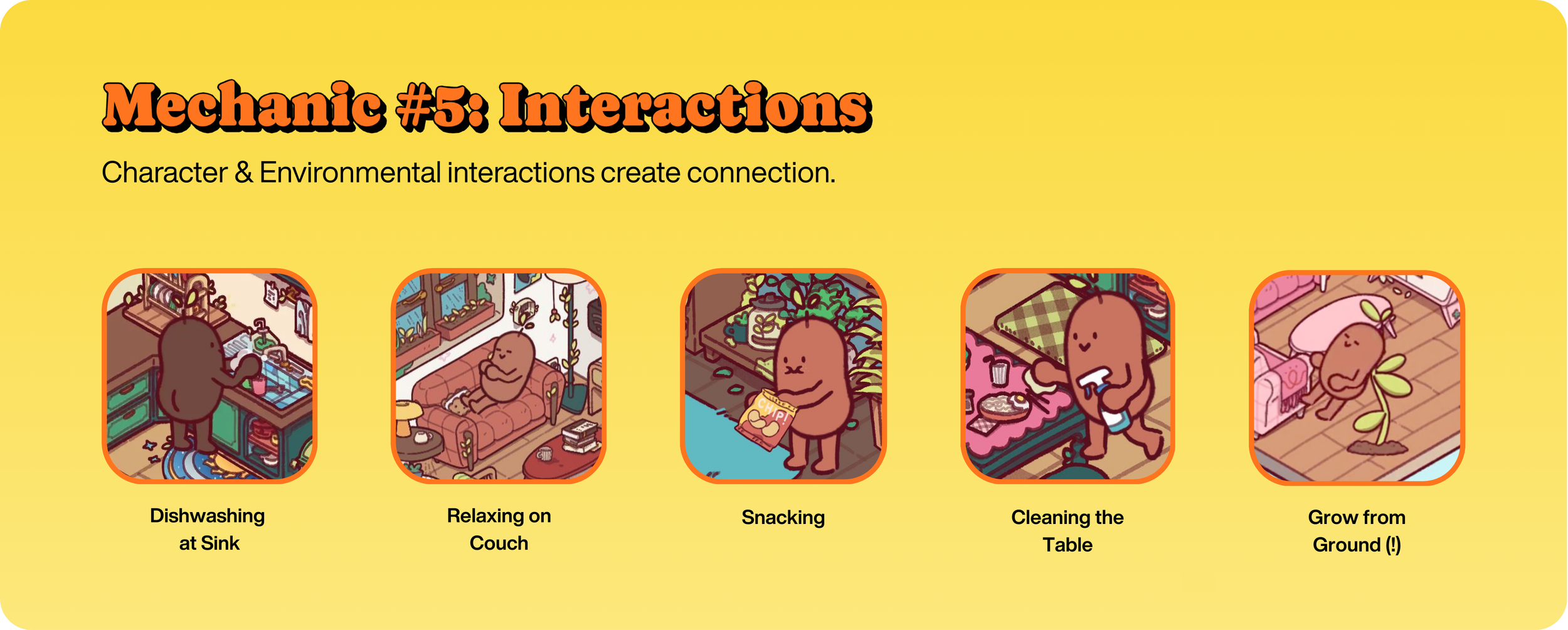
During a session, the bean is shown knitting socks and scarves, and these animations evolve with new environments and goods. If the user interrupts focus prematurely, the bean visibly becomes sad, creating a subtle emotional lever that ties user behavior to character outcomes rather than abstract points.
Environmentally, newly acquired decorations and room expansions are not static. Furniture and themed goods (e.g., couches in the living room, sinks in the kitchen) are animated in context-appropriate ways, creating a living space that feels responsive to user effort. These interactions serve a psychological purpose: ambient feedback reinforces long-term attachment by making users feel their progress matters beyond min-maxing some metrics. Emotional connection increases return frequency, reduces churn, and deepens habit formation.
Key Takeaways
Here are some ways you can apply the lessons from Focus Friend:
Turn User Effort Into a Persistent World. By converting focus sessions into rooms, furniture, and layout, progress creates a living footprint. This same pattern underlies Hay Day farms, Animal Crossing islands, and Spotify playlists. Create artifacts users hesitate to leave because they encode time, care, and identity.
Use Expansion to Renew Aspiration, Not Just Add Content. Room expansions in Focus Friend periodically redefine aspiration, creating new goals. This mirrors Hay Day’s Fishing Area and Riverboat expansions. The lesson is to reopen the horizon; long-term engagement depends on moments that say, “there’s a bigger version of this waiting.”
Let Personalization Turn Progress Into Identity. Decoration in Focus Friend is not cosmetic polish; it is how progress becomes personal. Over time, the home reflects taste, effort, and history, raising the emotional cost of churn. This identity conversion is why Spotify Wrapped, Nike Run Club profiles, and customized dashboards resonate more than raw stats.
Consider Monetization Mechanics that Remove Friction (Without Breaking Progression). Focus Friend’s monetization works because it removes friction without removing effort. Paid users earn currency faster but they still participate in the same progression system. Monetization smooths the path for invested users rather than skipping the journey entirely.
Design for Emotional Connection, Not Just Feedback. Focus Friend’s companion animations (knitting, resting, reacting emotionally) transform progress into a relationship. This “pet-like” design creates attachment. The same emotional mechanics power Finch, Duolingo’s owl reactions, and messaging apps that surface presence or mood.
Philosophical Musing:
Focus Friend’s success is not an anomaly or a product of novelty. It is the predictable result of treating progression as a first-class system rather than a motivational overlay, where every major mechanic ensures sustained effort leaves a visible, personal, and lasting trace.
The broader implication extends beyond productivity apps: systems that demand behavior change without evidence of becoming will continue to churn, while systems that externalize mastery through persistence, expansion, identity, and emotional connection earn long-term commitment.