The Post-Block Blast Playbook
Written by Ahmetcan Demirel, a true puzzler who plays, analyzes, builds and ships puzzle games.
Block Puzzles have been running the Hybridcasual Puzzle lane for a while now. If you look at download charts, it has become relatively normal to see multiple Block titles near the top simultaneously.
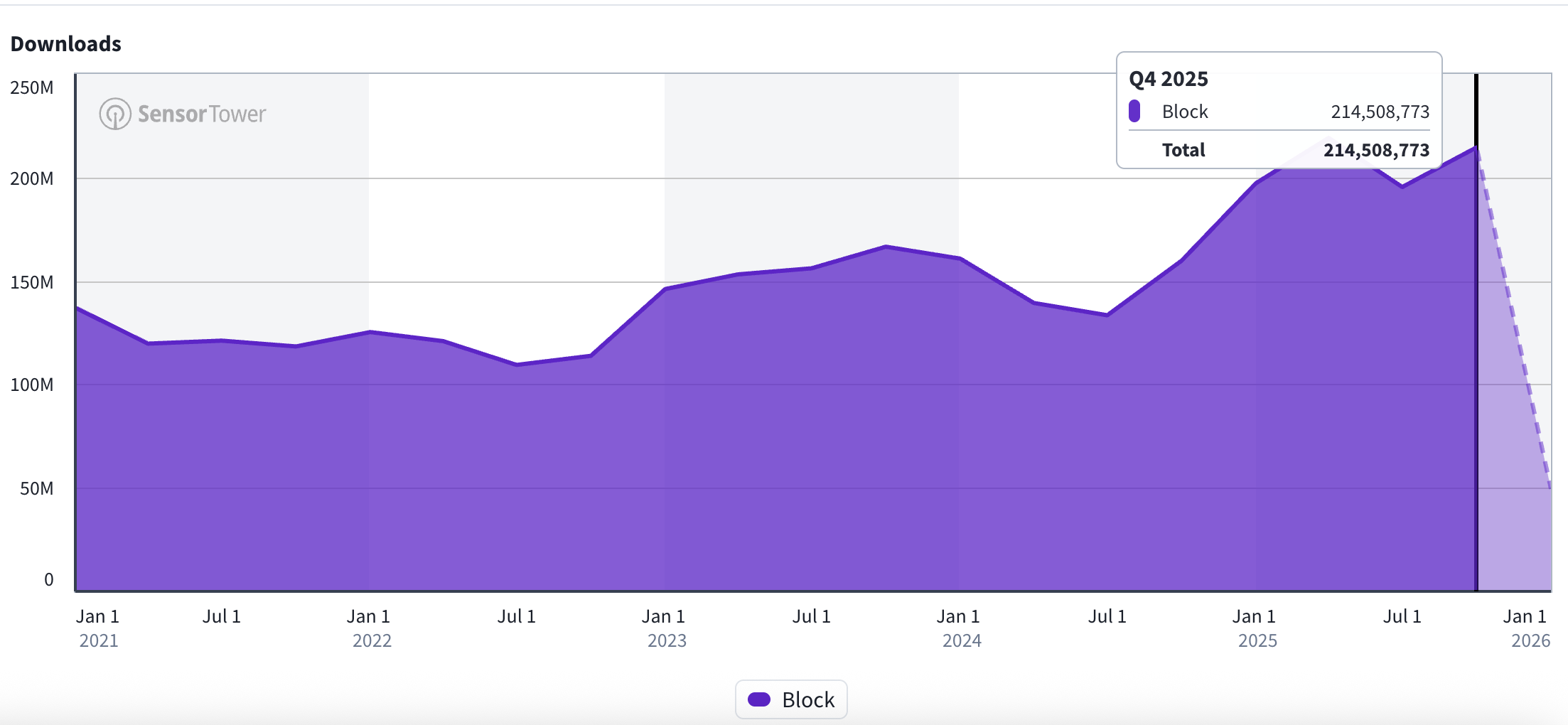
Block Puzzle downloads picked up in mid-2024
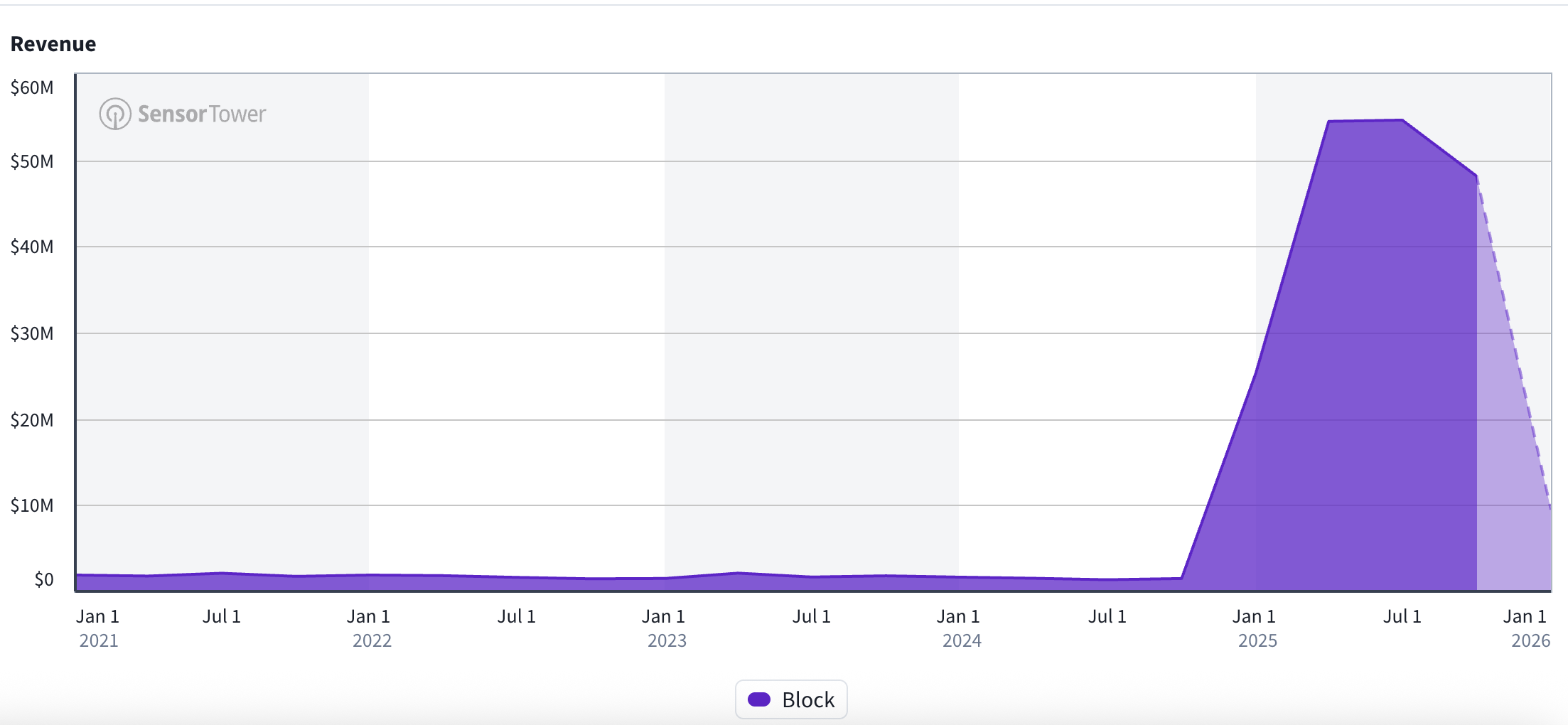
but the IAP jump in early 2025 was on a completely different scale…
What is more interesting is what happened next. As the market got crowded, new entrants showed up with small but meaningful twists, and some of them managed to climb past “big downloads” into “serious revenue” territory, too.
So what are we even calling a “Block Puzzle” at this point, and why does this format keep working when so many other puzzle subgenres fade after one spike? Let’s unpack it.
Similar to Tetris, but Different
Like most puzzle subgenres, the Block Puzzle space did not invent a brand new core mechanic. It borrowed a mechanic that was already battle-tested, understood, and wired into players’ brains. That mechanic is Tetris. It offered three simple rules to follow:
Fit pieces together in the most space-efficient way.
Avoid dead space.
Keep the board alive.
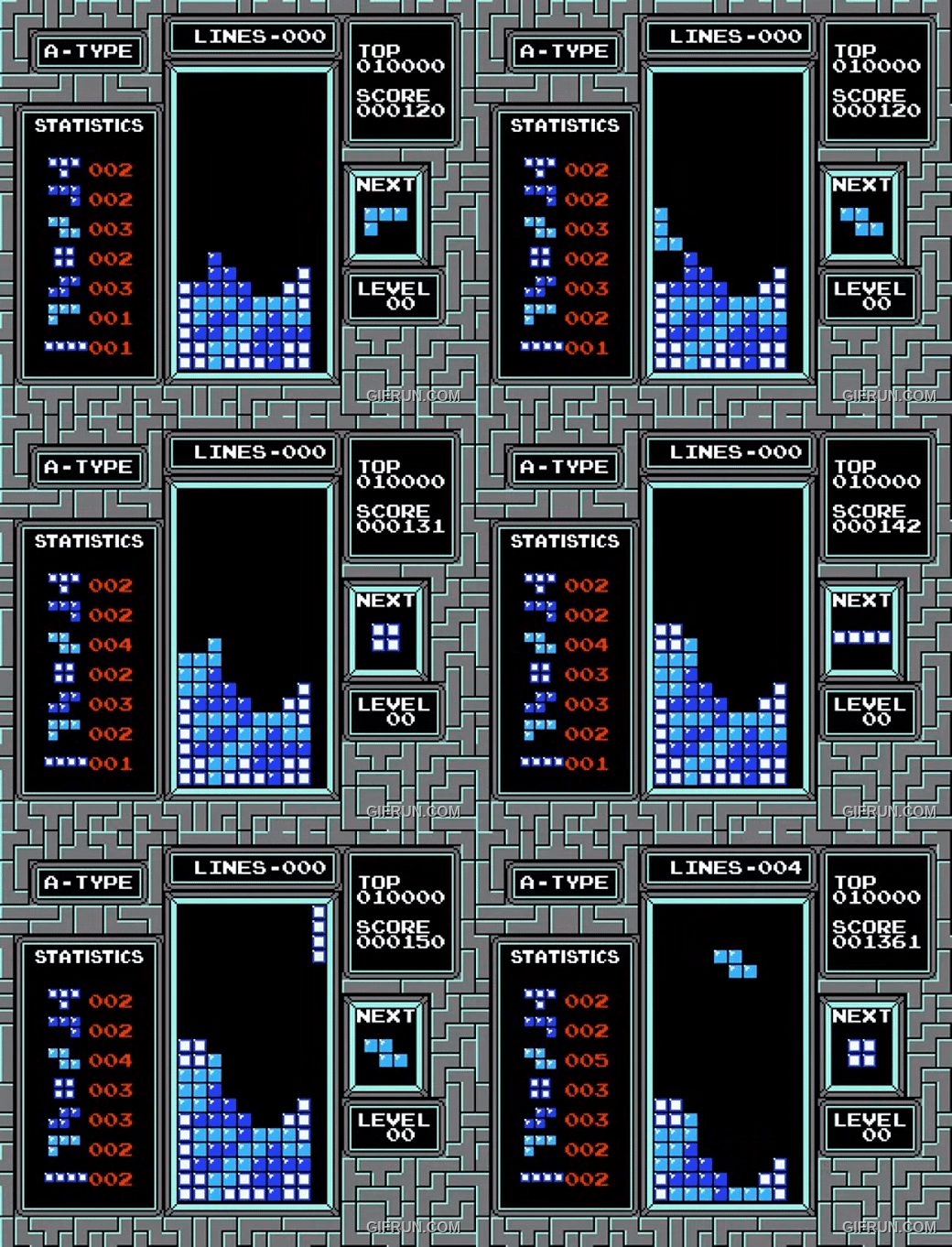
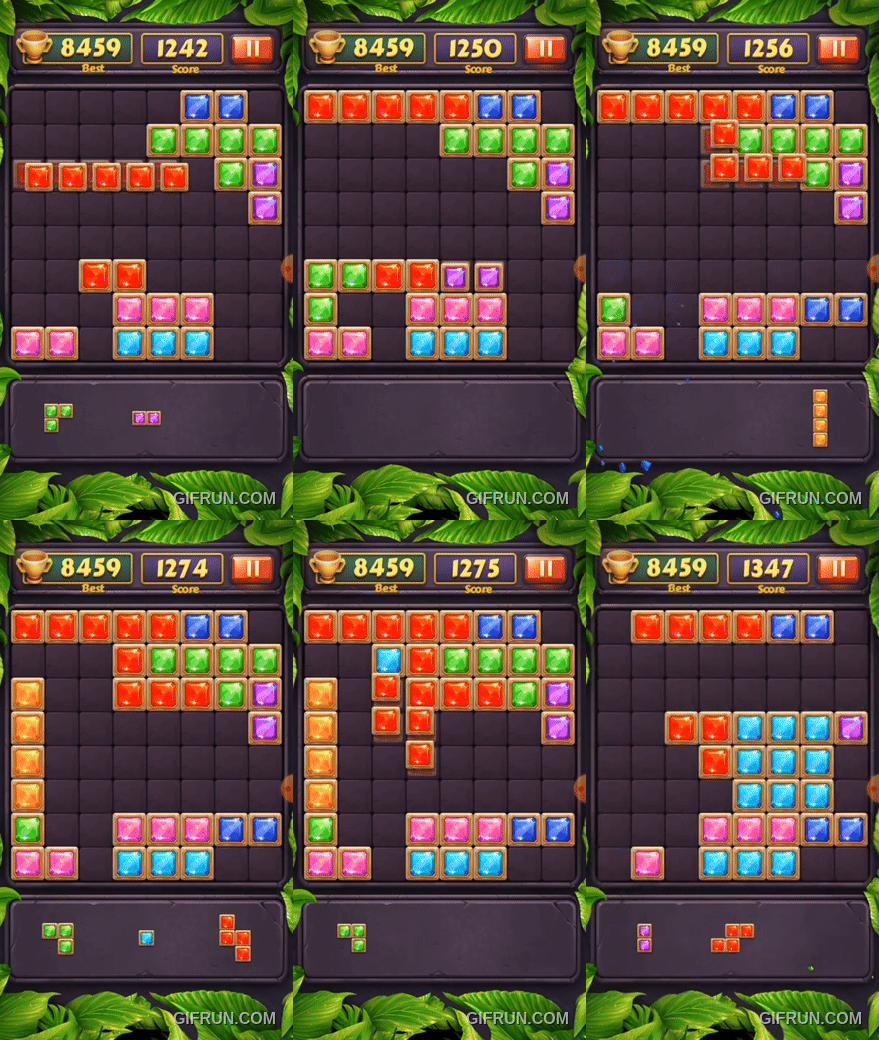
Tetris (left, 40 years ago), Block Jewel Puzzle (middle, 10 years ago), and Block Blast (right, 3 years ago): The evolution of Block Puzzles.
When you play a traditional Block Puzzle, you are basically playing Tetris, but packaged for the Hybridcasual Puzzle economy. Levels instead of endless runs. Goals instead of pure survival. Obstacles that create spikes, not just speed. The core loop stays familiar while the wrapper gets modern.
And that origin story matters because it explains the ridiculous download volume. Tetris is one of the most well-known games ever. If your game looks like it, your UA has an unfair advantage before you even say a word.
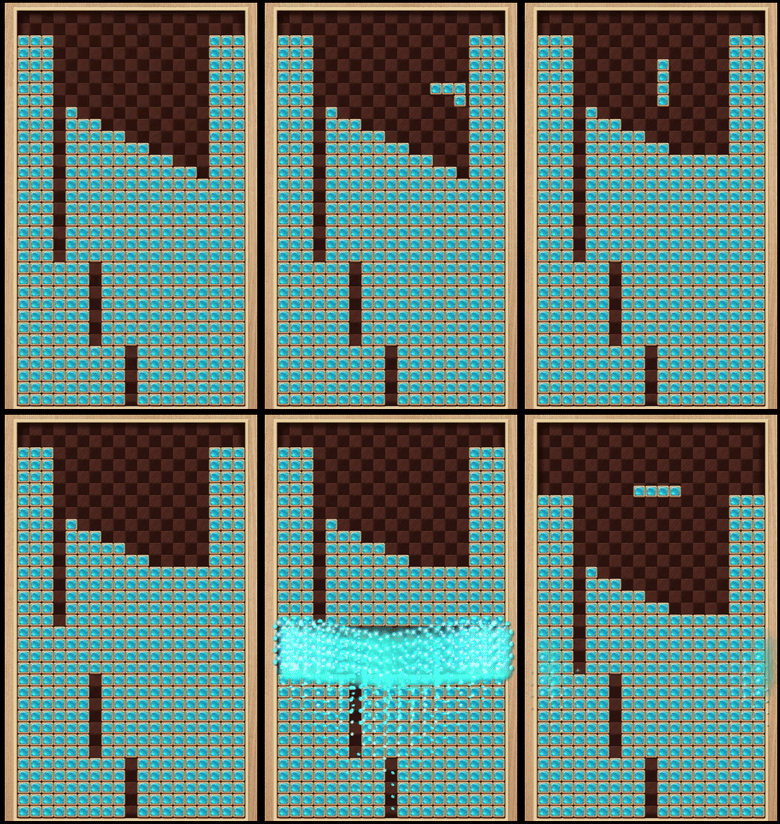
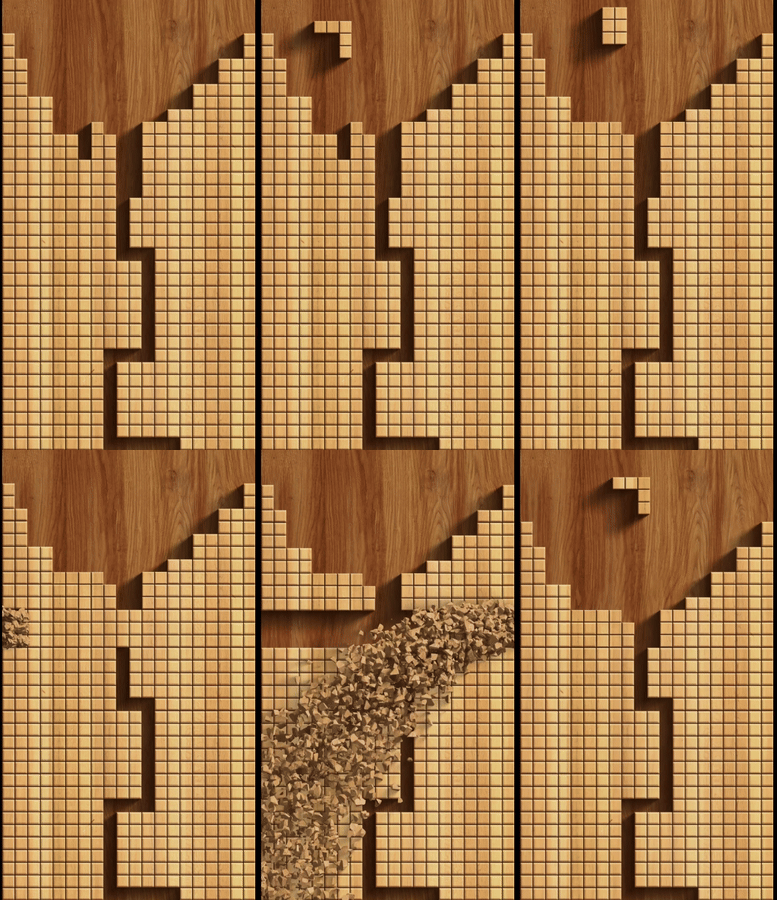
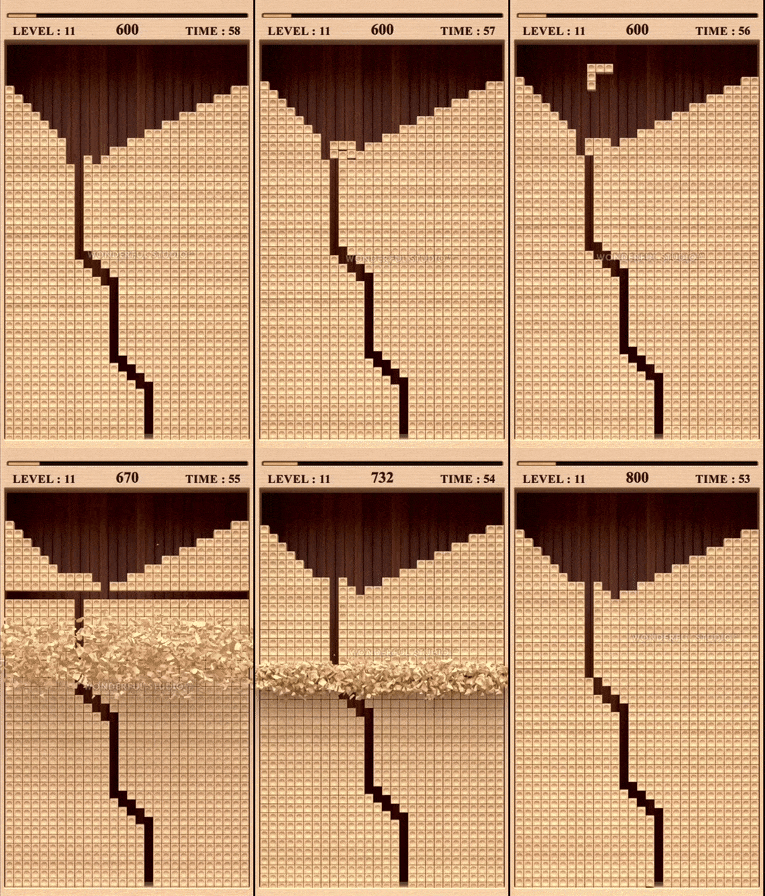
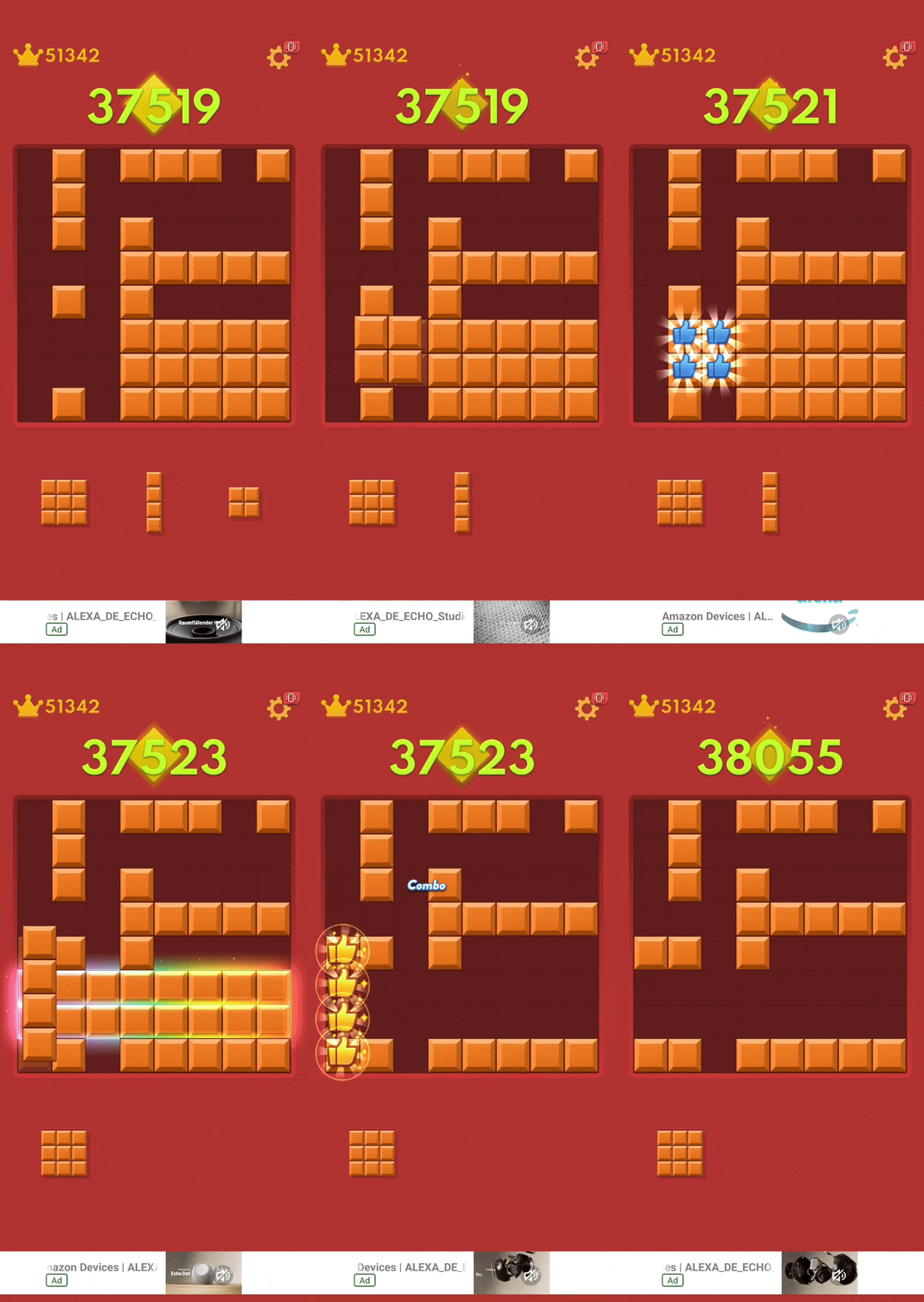
Creatives from Block Blast (left), Woodoku (middle), and Block Crush (right) show how top Block Puzzles use a Tetris-like look for UA.
Players instantly understand the playing pattern because it resembles something they already know and probably played. In a world of ever-decreasing attention spans, where players need to understand what your game is before they download it instantly, this origin story becomes a real UA superpower.
So yes, the fact that Block Puzzle came from Tetris is not just trivia. It is a built-in UA superpower: instant comprehension, instant comfort, and a low mental barrier to hit install.
Expansion from the Tetris Roots
While using Tetris-like visuals as a UA advantage, Block Puzzles also kept most of the core mechanics intact in the early stages of their evolution. They started by iterating on the Tetris-rooted “fit pieces in the most space-efficient way” loop, then layering more Hybridcasual Puzzle structure on top of it over time. Same placement satisfaction, but with more systems around it that made it feel like a modern, scalable product.
First Generation: Simple Constraints, Strong Levels
For the first generation of Block Puzzle games, the innovation was not about reinventing the fantasy. It was mostly about mechanics, and specifically about constraints that make the gameplay cleaner.
The biggest step was shrinking the problem. Instead of huge boards or endless space, these games leaned into classical puzzle boards with limited dimensions. That single constraint did a lot of work: It kept players focused, reduced chaos, and turned every placement into a clearer decision.
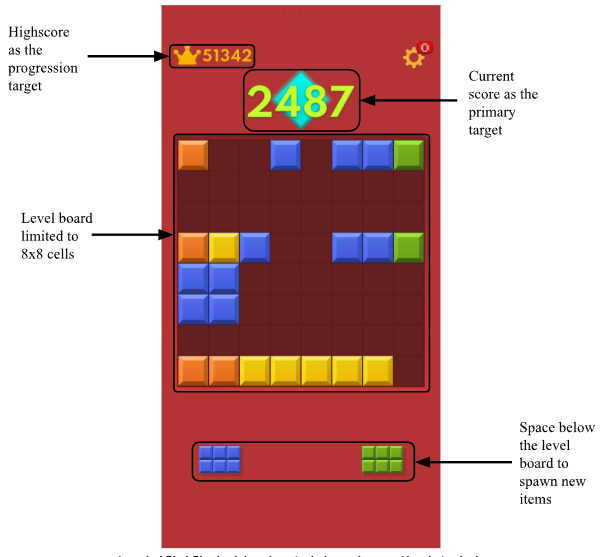
A standard Block Blast level shows how simple the core became without losing depth.
Then came the control simplification that also added depth. The old “next piece falls from the top” rule got replaced with “you get 3 objects each turn to put on the board.” On paper, it sounds easier, and it is. No timing pressure, no misdrops. But it also makes the puzzle more interesting, because choice becomes a skill. You are not reacting to a falling piece; you are planning the order of your own tools.
And for puzzle players who want progression, not just survival, the first generation also introduced a level structure. You could still chase a high score if you wanted, but now you also had goal-based levels with varying degrees of challenge. That shift matters because it reframes Block Puzzle from “infinite time killer” into “beatable content.”
Block Blast became the poster boy of this wave. Yes, Block Puzzles existed long before it, but Block Blast is the game that turned first-generation principles into a machine, especially from the beginning of 2025, when it crossed 30 million installs per month. It borrowed the simple structure of earlier first-generation iterations and doubled down on the strength of that simplicity instead of trying to diversify.
While other games tried to add depth through new rules, new objects, and extra systems, Block Blast stayed true to the Tetris outlook and the core placement experience, then used that clarity to deliver exciting levels.
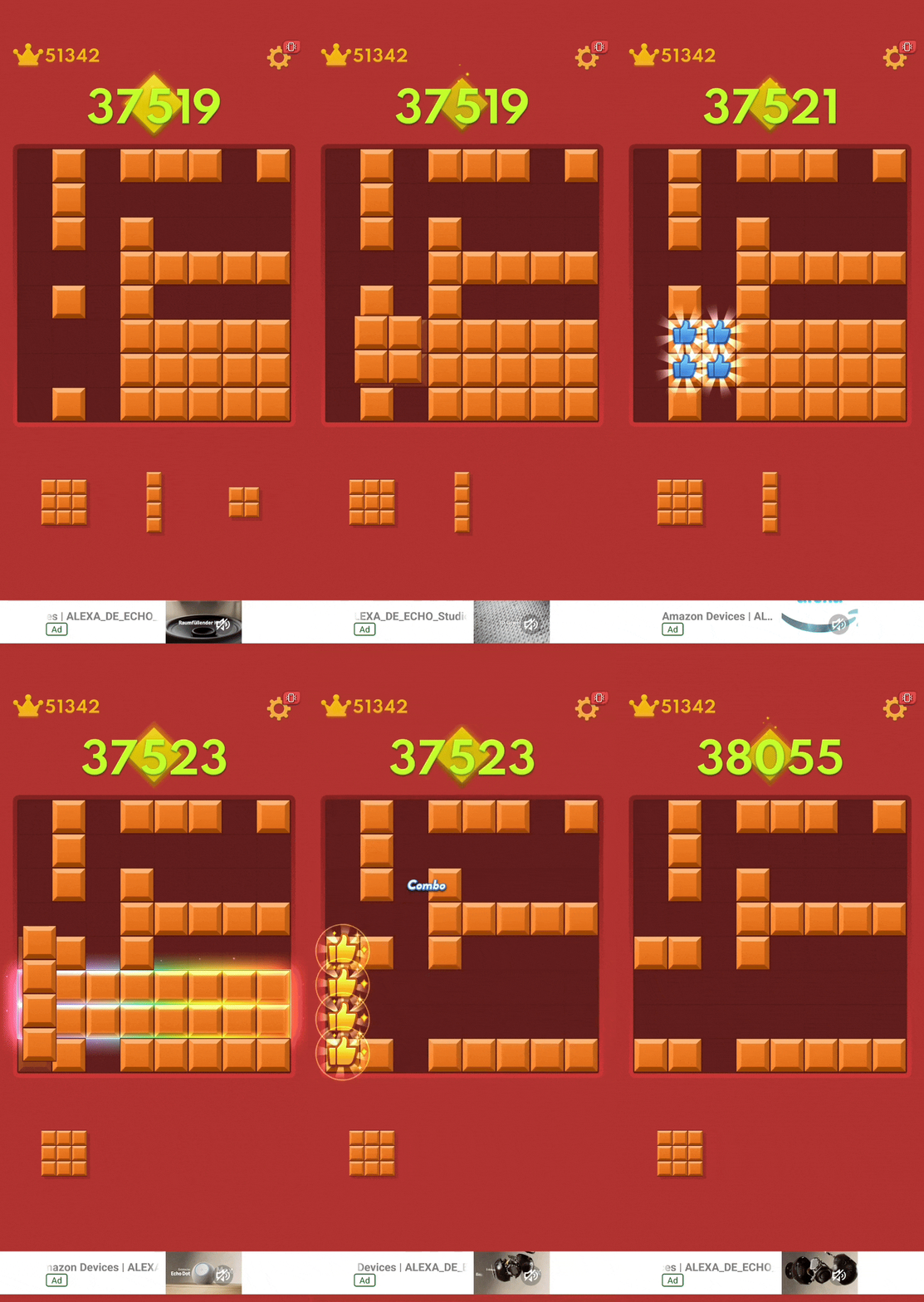
Block Blast not only pushes players with clever spawns, but also rewards the right moves with clear feedback.
If you ever played Block Blast, you know it is not a “relaxing” Block Puzzle. It pushes you in whichever mode you pick. Each new batch of pieces raises the stakes. You feel the board tighten, you feel your margin for error shrink, and the game makes that tension readable. It even gives clear feedback when you make the “perfect” move or one of the “correct” moves that helped you avoid failure.
And the punchline is monetization. The game still does not offer IAP and relies purely on ad monetization. Sure, that is also about the team’s ad monetization skills and how well they run that engine. But the bigger lesson is uncomfortable for a lot of teams: If you keep things simple and serve players a great level of experience, you can still be financially successful even when you go against the grain.
The Second Generation: Designed Boards, Designed Pressure
Block Blast proved the first-generation formula at scale. Then the market got flooded with the same Tetris-looking grid in UA, so the next winners had to do something different fast. That is where the second generation shows up: same grid logic, new visual language, and a completely different level of framing.
Rollic basically laid out the recipe with what I call “Static Levels”. You still have a board with limited dimensions, but you stop drip-feeding the problem. The level gives you the full problem set upfront, and you beat it by solving mini puzzles inside the board instead of endlessly cycling “place pieces, clear, repeat.”
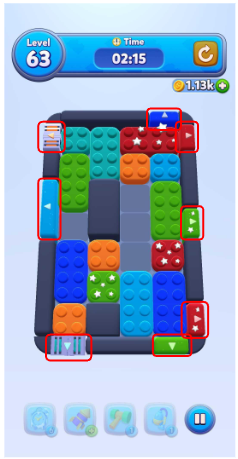
Even though this is one level, each color gate marked in red creates its own mini puzzle for the player to solve.
Concretely, this usually means the level is built around a specific constraint or target state. You are not just keeping the board alive. You are clearing a blocked pocket, freeing a trapped area, opening space in a specific order, or hitting a goal that forces deliberate sequencing. The board is the puzzle, not the container for a high score run.
Before Rollic kicked off the second generation of Block Puzzle, they tested this “simple core, strong static levels” formula in other Hybridcasual Puzzle hits like Twisted Tangle, Seat Away, and Screw Jam. That mattered because it proved you can scale by perfecting level design, not by inventing new mechanics every week.
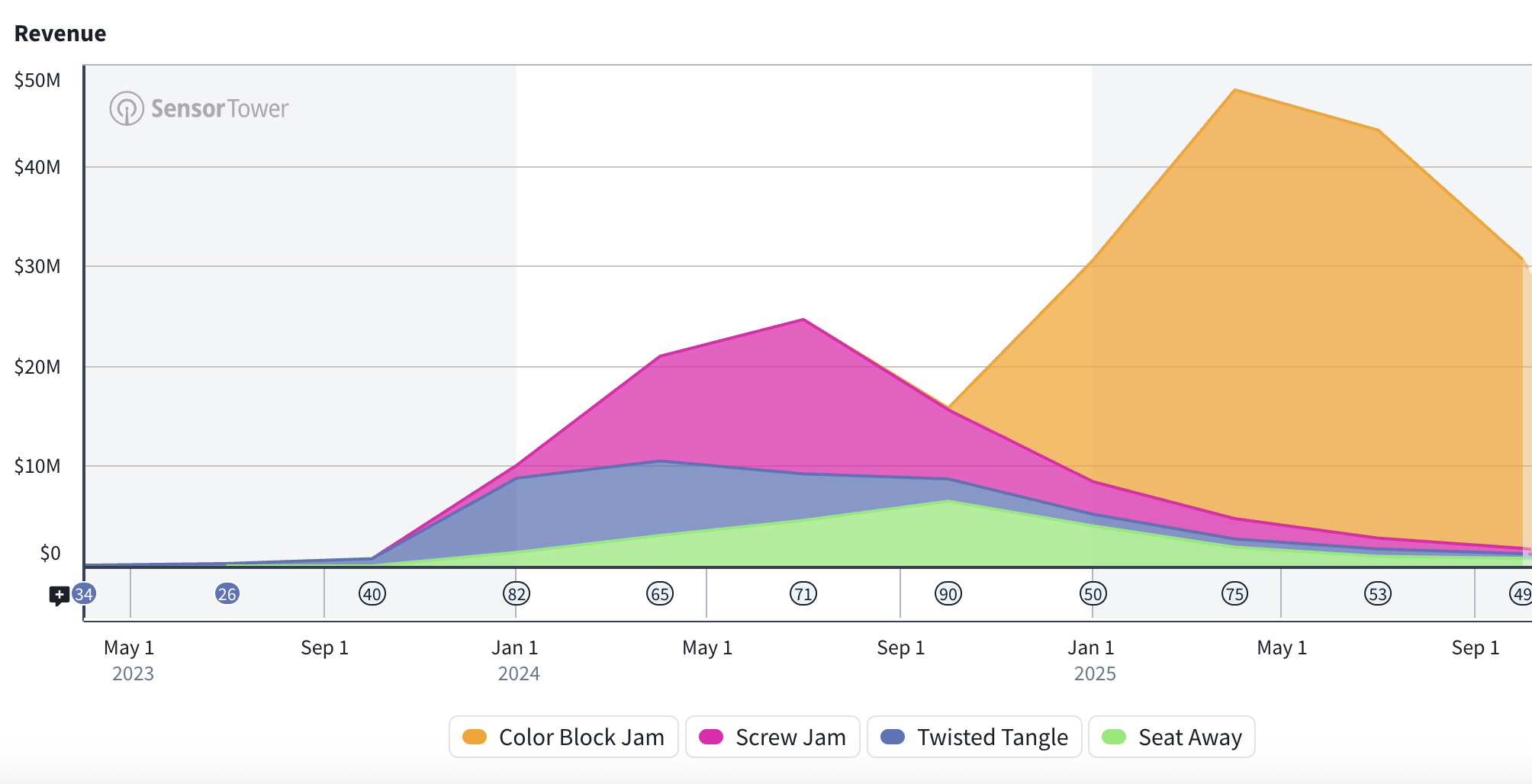
Twisted Tangle, Seat Away, and Screw Jam paved the way for Color Block Jam
*note that IAA revenue is missing from the graphs
After that, they started what you can reasonably call the second generation of Block Puzzle with Color Block Jam. The game became one of the biggest Hybridcasual Puzzle breakouts, and it spawned a huge wave of copycats and reskins.
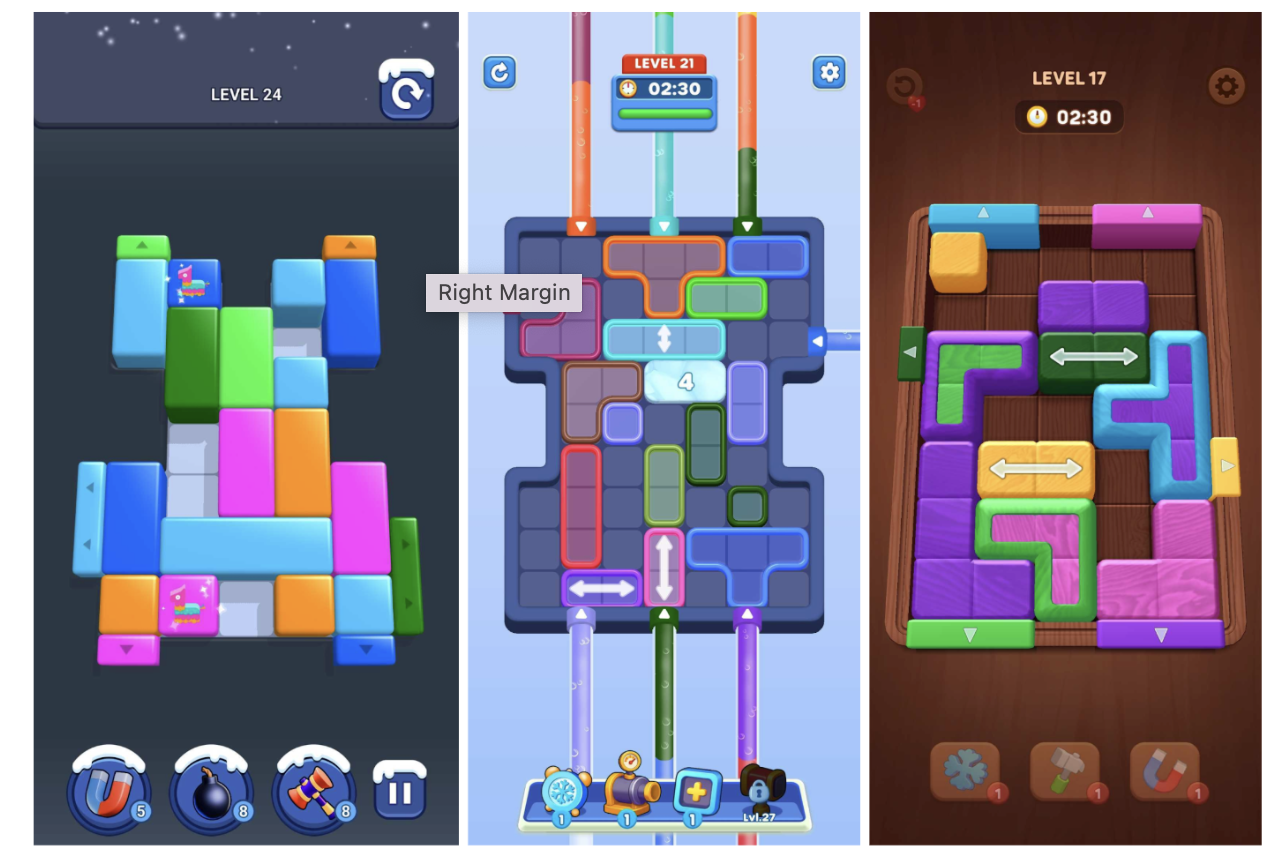
A few Color Block Jam reskins still going strong: Shape Escape (left), Water Out (middle), and Wood Away (right).
Here is the real shift: The first generation of Block Puzzle was “gamified” Tetris: the same placement DNA, but packaged with cleaner controls, smaller boards, and optional level goals sitting on top of a high score loop. The second generation flips the framing. Instead of surviving as long as possible, you are solving a designed, static board with intentional constraints, obstacles, and boosters, which creates clearer pressure points and a more natural foundation for sustainable IAP.
Two reasons make it more compatible with an IAP-focused economy:
1. Visual polish raises willingness to pay: Higher fidelity visuals do not just look nicer. They make the whole product feel more premium, which makes boosters and saves feel less like a cheap trick and more like a legitimate purchase.
2. Level variety creates more justified pressure points: The second generation pulls obstacles and boosters from other puzzle subgenres and uses them to design sharper difficulty spikes. That gives you cleaner fail moments and clearer reasons to buy help. In the first generation, the fantasy is “I messed up my placement”. In the second generation, the fantasy becomes “this level is a designed problem, and I can pay to break it”.
With both boxes ticked, Color Block Jam is still a strong performer in the top-grossing charts, and the second-generation followers keep popping up.
Third Generation: Themed Skins, Deeper Toolkits
While the second generation was still establishing its ground and design principles, the third generation of Block Puzzle games already started its run. That is the real tell for how fast this market moves. The moment a formula becomes legible, teams start racing to differentiate before they are forced into a head-to-head fight with the previous iterations.
So far, the third generation has two clear differentiators: theme distinction and integration of more puzzle elements.
1. Distinct themes: This is the most visible shift. Teams are still building on familiar Block Puzzle mechanics (especially the second generation), but they are wrapping them in much more opinionated visuals and fantasies that are easy to differentiate in UA.
A few themes have already shown real traction:
The car/bus jam theme has been everywhere. Multiple teams shipped successful titles in this lane, and it has become a reliable way to make Block Puzzle look fresh without changing the underlying logic too much.
The snake/gecko theme has also produced winners and is still actively explored across several titles. The fantasy is distinct enough that it does not instantly read as “yet another block grid,” even when the interaction is still placement and clearing.
And lately, we have been watching the rise of the arrow theme. It is early, but it already looks like the next wave that will produce a set of successful Block Puzzle games before the market rotates again.
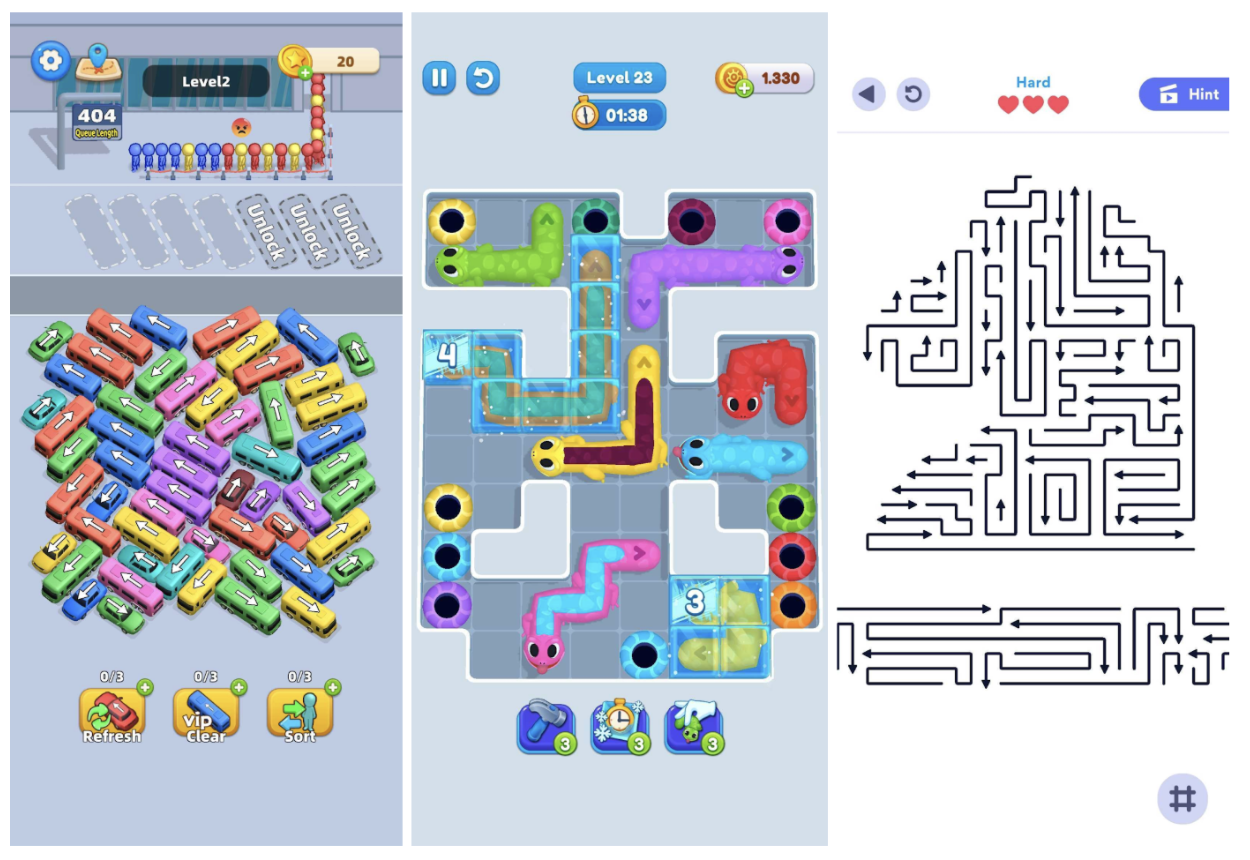
Car Jam (left), Gecko Out (middle), and Arrows (right) show a few of the themes third generation Block Puzzle games have explored so far.
2. Heavier integration of classical puzzle elements: This generation is far more aggressive about pulling in the modern puzzle toolbox: boosters, obstacles, and more “things to do” inside a level. The second generation did this sometimes, but the third generation treats it like the default. The goal is to increase the number of levers the player can touch during play, not just how cleanly they can place pieces.
This level of integration leads to the most important downstream effect: third-generation Block Puzzle games tend to lean harder into IAP monetization. As mentioned before, when your levels are designed as strong puzzles, and you have a rich set of obstacles, selling boosters is not just a monetization layer; it is a natural extension of the experience. You are offering players a way to break a problem they already care about solving.
And we can see that reflected in performance patterns: third-generation titles generally trend toward higher revenue per download, largely because they are designed from day one to convert purchase intent, not just collect installs.
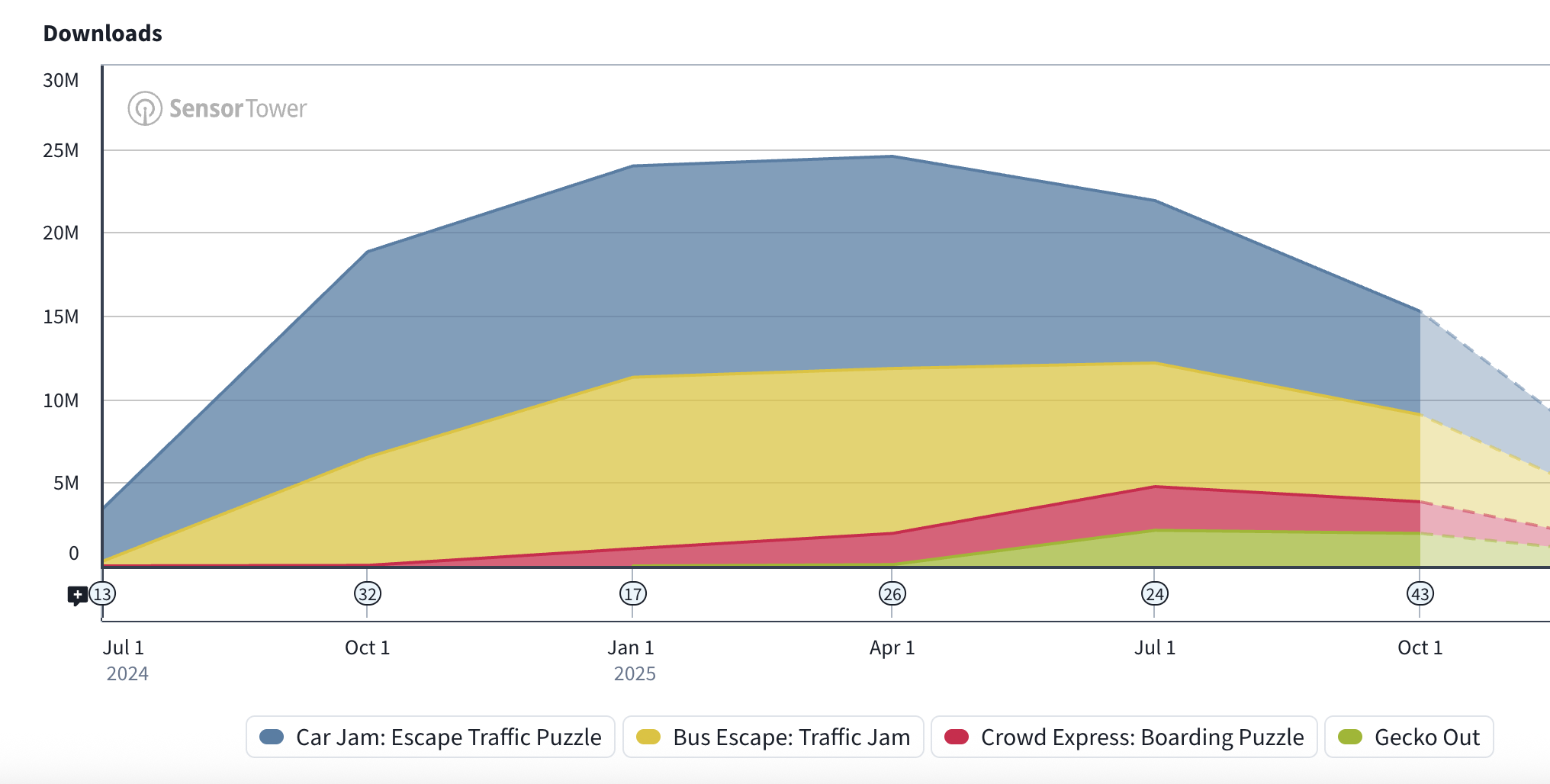
Car Jam, Bus Escape, Crowd Express, and Gecko Out, four leading third-gen Block Puzzles, have seen declining downloads last year.
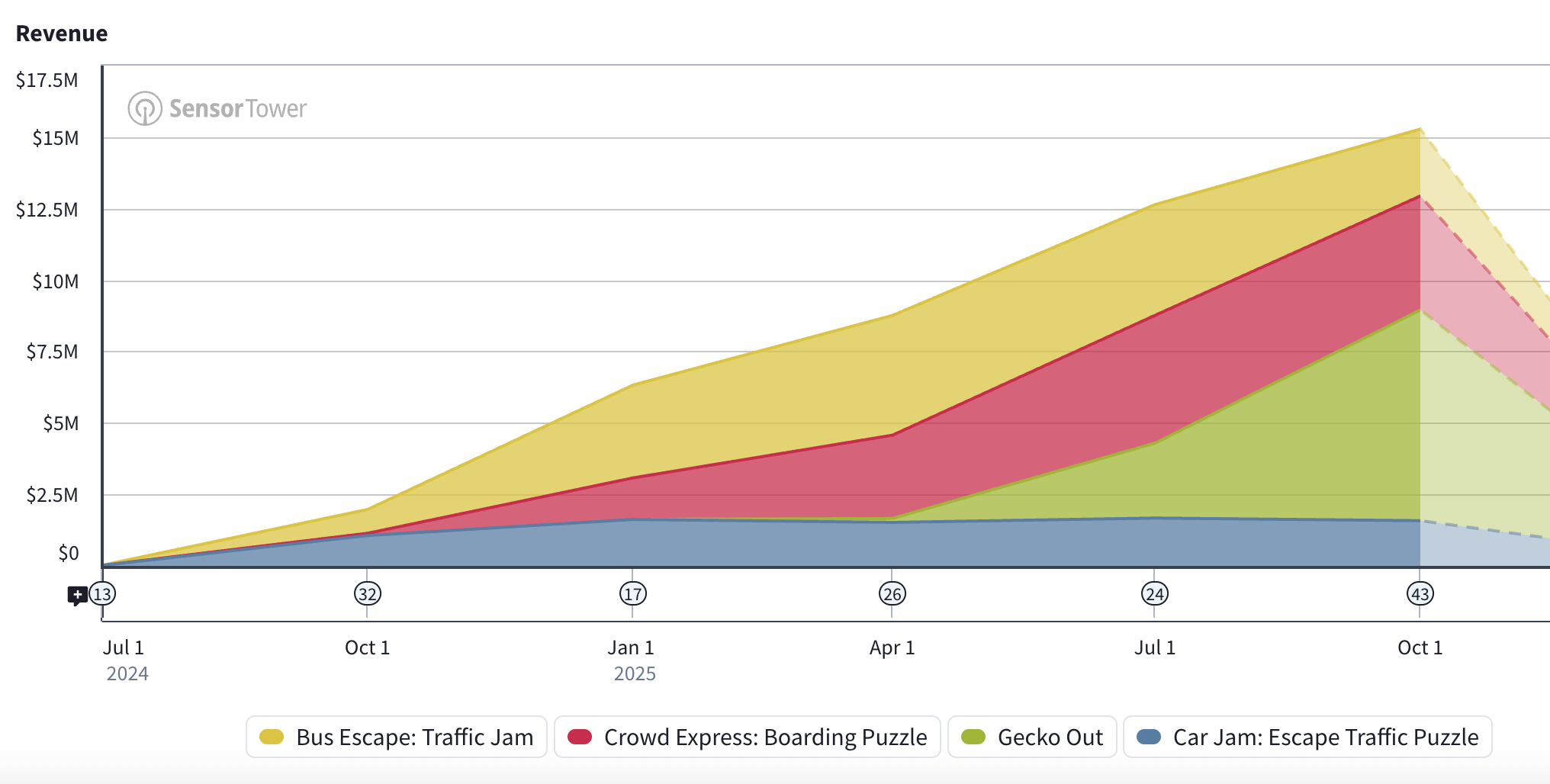
But their IAP performance has been growing with Gecko Out pulling ahead despite being the last to launch.
Of course, this is just the evidence we can see right now. As the market grows, I expect the third generation to keep mutating: new themes, tighter puzzle toolkits, and better IAP surfaces until the next iteration forces another reset.
Where Block Puzzle Goes Next
Block Puzzle has been a staple of the puzzle market for a simple reason: It is built on a super-simple but genuinely fun core mechanic, and it inherits the advantage of that mechanic being one of the most recognized play patterns in games. Over time, it also proved how versatile the subgenre is. It can appeal to very different player types, and it can generate meaningful lifetime value from those players depending on how you package the experience. The fact that we are still seeing new Block Puzzle titles launch, scale, and run successfully is the cleanest proof that this part of the puzzle market is durable.
Looking at the generations, I think the first generation is basically exhausted. It is extremely hard to crack unless a team finds a new UA lever that gets players even cheaper than Block Blast does, while also running a very tight level funnel. The second generation also feels settled around the core mechanics that Color Block Jam established. In most cases, the realistic play is a strong reskin, and honestly, pulling that off at scale is still an impressive feat.
The third generation is an exciting space. There is no real limit on how you can theme the Color Block Jam style gameplay, which opens a huge surface area for creativity. And because theming often nudges mechanics too, even small rule changes can add more depth and value to the experience. That is why I am confident we will keep seeing new hits in the third generation. Whether we ever see a fourth generation, however, depends on one thing: How far developers are willing to push creativity before the market forces the next reset…