GDC 2026 POST-MORTEM
Let’s get the obvious out of the way: Yes, GDC is expensive. Yes, San Francisco is a mess. Yes, the jet lag will destroy you in both directions. The political climate is making travel genuinely difficult. Not to mention the collapse of US gaming jobs has hollowed out the conference floor.
All of that is true, and none of it is the point.
The people who write off GDC are confusing the conference with the convention. GDC lives in the side events just as much as it thrives inside the Moscone Center. And this year, with fewer 'tourists' in the room, there were fewer back-to-backs and more time for conversations that went level or two deeper.
One more thing. If you come to San Francisco and stay in the Moscone bubble, moving between the Financial District and SOMA for a week, you're doing it wrong twice over.
If you want to understand why Northern California is the place the world’s best tech entrepreneurs have called home at some point in their careers, cross the bridge. Take the ferry to Sausalito. Drive to Mill Valley or Palo Alto. Hike in Muir Woods. Run along the edge of Golden Gate Park at sunrise. Take a day trip to Carmel, stay the weekend in Big Sur, or Napa Valley. Or just walk around in the Marina District, Pacific Heights, Russian Hill, and Haight-Ashbury.
If all you see during GDC is downtown San Francisco, you’re missing out on what makes NorCal the place that numerous great builders have called home at one point or anothe.
THE MOOD: Cautious
The word I kept coming back to was cautious, and underneath that, something closer to resigned. Not bitter, not defeated. Just a broad acceptance that this is the market now, these are the conditions, let's figure out how to operate in them. There was plenty of performative optimism floating around in public settings, but one-on-one, it evaporated quickly.
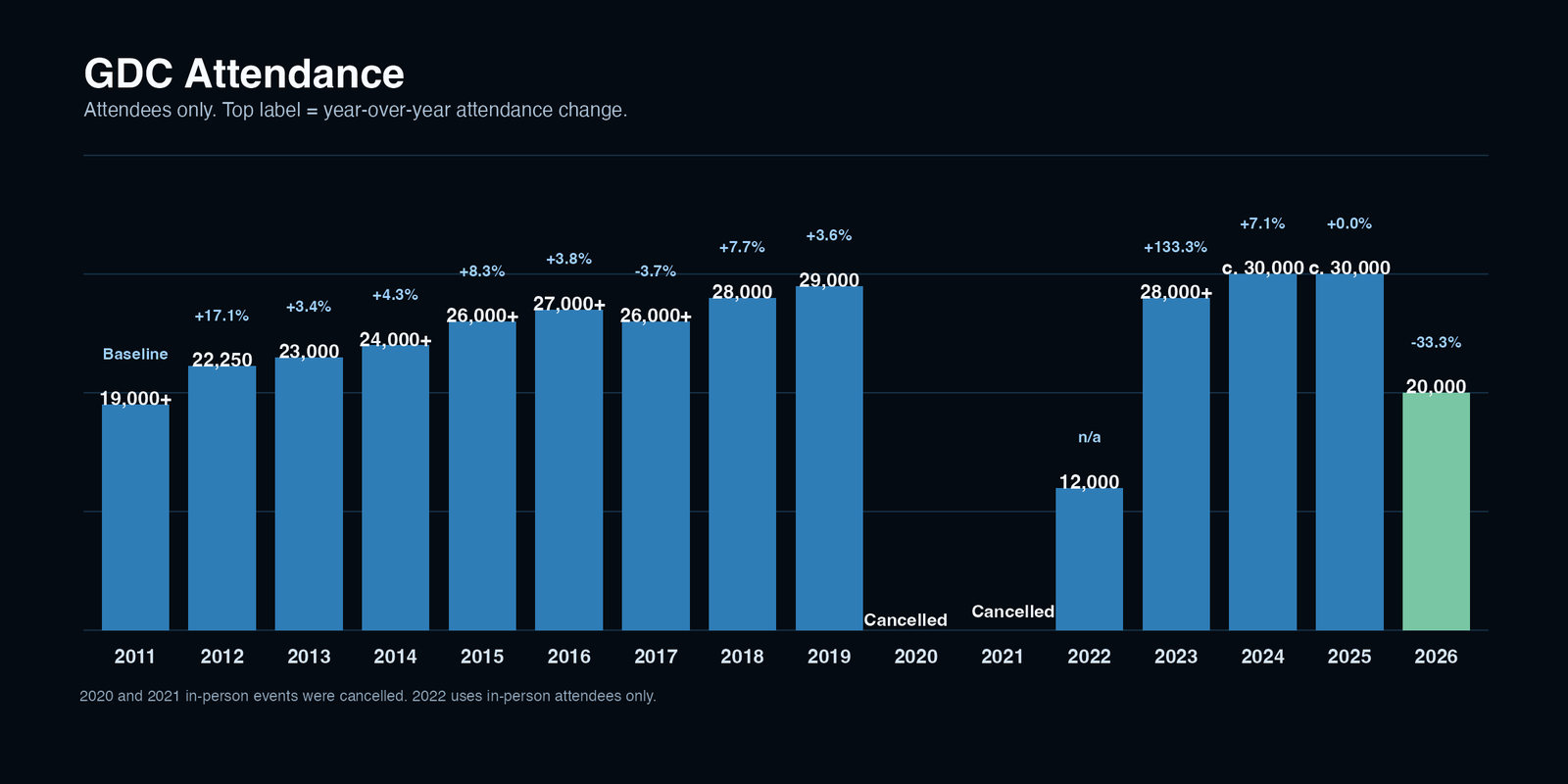
GDC attendence fell below 2012. That’s the year when microtransactions were introduced in App Store.
The conference itself felt smaller. Nearly a third fewer visitors compared to last year meant lighter lobbies, shorter queues, and meetings that actually started on time. Some of that is the geopolitical reality. Some of it is the industry's own contraction. But the decision-makers were all there. The rooms that mattered were all full. I don’t know any other conference that has a similar level of decision-maker concentration.
MOST SURPRISING RUMOR: Netflix Buys of Xbox (!)
Microsoft seems to be done with gaming. Netflix wants to own the living room. This could be a match made in M&A heaven. Or not.
Everyone loves a good rumor from the GDC. So here’s one you’ll enjoy. Netflix could buy Xbox. The logic? Netflix wants to own the living room, the Warner Bros. deal fell apart, leaving them with a chunk of change to spend, Microsoft seems to want to exit gaming, and the Azure infrastructure synergies make a creative deal structure possible. Just keep in mind that this is a hypothesis, not confirmed news, and not a joke either.
The other thing that genuinely surprised me? Chinese publishers are quietly worried about their own Western market success. Get too dominant, and someone makes a call. They've watched it happen to Chinese companies in Korea. They saw what happened to TikTok. They're not afraid of competition. They're actively welcoming it, because being too dominant carries its own risk.
THE DOMINANT TOPIC: AI Anxiety vs. Reality
Every conversation eventually turned to AI. Not to AI games, there were (still) no AI games worth talking about. To pipelines, agents, tooling, and the underlying question of whether organizations can actually change fast enough to matter.
What surprised me was the energy shift: start a conversation about market conditions, and the room is cautious, resigned. Mention AI, and something flips. CEOs who have no business being this deep in the weeds were describing what agents they built on the plane over.
The most honest AI conversation I had? It must have been with a CEO of a large company with over 1,000 employees, who told me where they had actually seen results: not in game development, but in back-office operations. Accounting, process automation, essentially everything under the COO. All the unglamorous stuff. That's what genuine adoption looks like when the pressure to deliver is real.
That last part is the one nobody is saying loudly: AI-native teams make post-2022 funded studios look obsolete. Here’s what I saw time and time again. Two studios are showing a demo. One spent three years and millions of dollars to build theirs. The other one achieved a similar-looking demo within just weeks and with no funding. The demo built with AI was not great. But it was always good enough to make the other team look both slow and expensive.
INVESTORS: The Big VCs Are Out, Mostly.
The multi-billion-dollar generalist funds have exited gaming because the returns haven't materialized. On mobile, only Turkish startups continue to get funded. And while PC gaming is growing, it’s simply not a business that fits the venture capital model.
The "veteran founder with 15 years of experience" profile that once attracted capital is being viewed with increasing skepticism. Investors are leaning toward younger, AI-native founders who don't carry the weight of old playbooks.
What's replacing the big VC money? If you’ve been trying to raise money for a studio, the answer is “nothing really”. Gaming-adjacent funds are now backing founders with “gaming DNA” who are building apps AI tools and defense drones. Active capital still exists. It’s just focused on selected geographies in Turkey, Israel, and Vietnam.
Bottom line: If you're not in those ecosystems, you're not genuinely AI-native or haven’t pivoted to tools, tech, or apps; it's going to be a hard year to raise capital.
BEST MOMENT: The Roblox Conversation
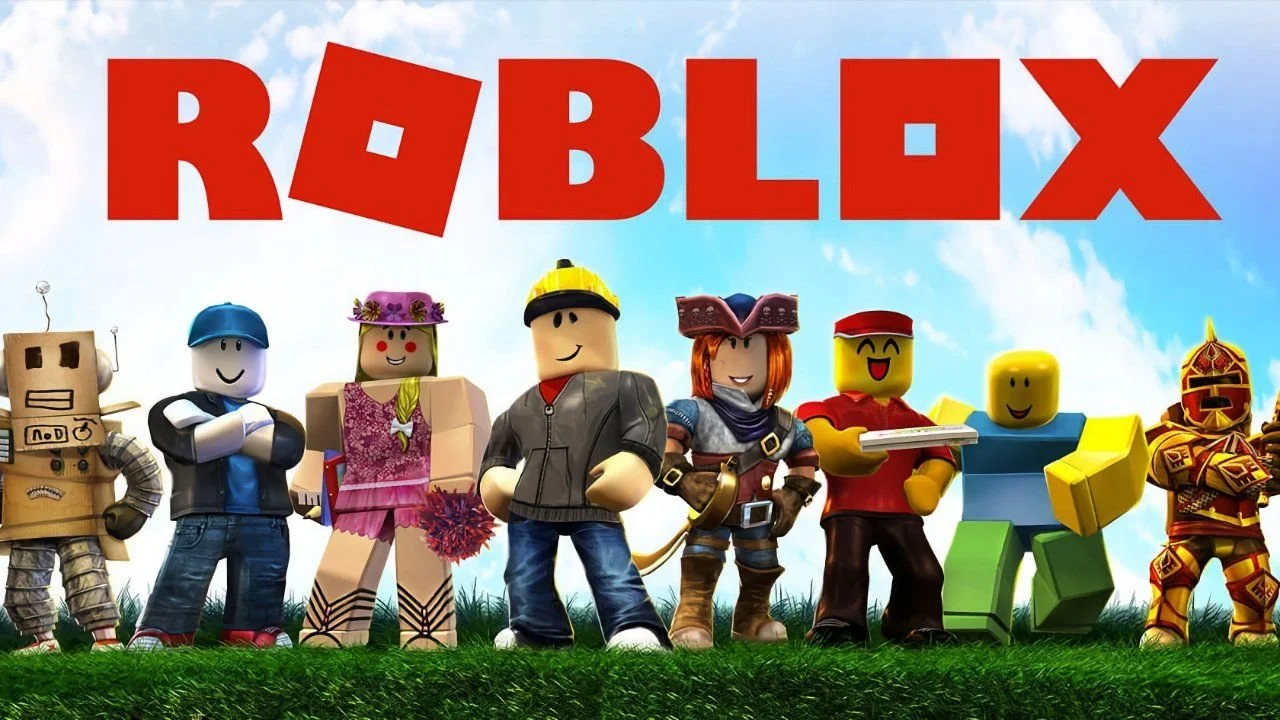
The conversation that will stay with me longest was about Roblox. Not Roblox as a kids' platform or a marketing channel, but Roblox as a fully-formed development ecosystem. The developers building there aren't teenagers experimenting anymore. They're nearly 30-year-old studio leads running teams of a hundred people, building native experiences for the biggest IPs in the world a level of craft the mainstream industry hasn't recognized.
What I saw this week: major publishers running competitive development processes across multiple Roblox studios simultaneously. Evaluating who executes their IP best, then selecting partners to build canonical franchise experiences on the platform. And investors looking to get a piece of the studios that are scaling.
This is not a tchotchke strategy. We’re seeing IP development for an audience that cannot be reached any other way. The developers who started on Roblox may not be a gateway to something else. Roblox might just be where they stay. That's the part many publishers haven’t fully processed yet. A part that many seasoned developers refuse to admit.
Final Thought: The Thing About GDC
Every year, I hear people say GDC is dying. Every year, I leave thinking about several conversations and connections that will last my entire career. This year was no different. The conference is smaller, and the floor is lighter, and San Francisco is complicated, and the global situation is making travel harder and more political than it should be. All of that is true.
But the side events were full of the most senior decision-makers in the global games industry. The conversations were more honest because fewer tourists were in the room. And the city, for all its contradictions, still does something to people. There's an ambition in the air here that doesn't exist in most places.
Personally, it was one of the best GDCs out of the dozen I’ve attended. I got into rooms with CEOs and founders whose companies represented 80% gaming industry revenues. Chinese, Turks, Europeans, and Americans. All sharing insights and discussing the future of games. Nothing like this exists at any other event.
When it comes to the actual conference, 20,000 visitors were enough to make it feel alive without making the area overcrowded and dysfunctional. Oh, and getting through border control was faster than ever before. Faster than going to Riyadh. About as fast as going to London. We’re talking about minutes.
So yes, GDC is expensive. Yes, it's far. Yes, you'll lose a week and a half to travel and jet lag. And no, you probably won't learn much new from the official sessions. But if you use the conference correctly, if you prioritize the right side events, attend selected keynotes, prioritize conversations over content, and the Marina over the Moscone, you'll leave with something worth the cost.
And if you have a free afternoon, drive over the Golden Gate Bridge. Hike through Muir Woods and remind yourself that some things don't have a meta. It's worth it. Trust me.
Michail Katkoff | GDC 2025