7 Lessons From Riot CFO Mark Sottosanti, Including How Arcane Season 2 Effectively Broke Even
Jen Donahoe and Eric Kress had a conversation with Mark Sottosanti, CFO at Riot Games, on Arcane’s economics, Riot’s mobile wins in China, their 5-for-7 launch record, and why Riot keeps its next games secret.
In 2012, Mark Sottosanti was running a small hedge fund and had no plans to change jobs. He had spent two years playing League of Legends with his son, and a visit to Riot’s offices turned into meetings with Riot’s leaders. They had been searching for a head of monetization for a long time, and every candidate with free-to-play experience came from Korean MMOs, Facebook or mobile games, where monetization ran too aggressively for Riot’s culture. Mark offered to help part-time, fell for the people, and wound down his fund to take the job.
I (this is me, Jen writing) worked at Riot from 2018 to 2021, where I helped set up the mobile publishing team and launch Teamfight Tactics (TFT) as Riot’s first mobile game, and I got to know Mark during those years. When Mark reached out to my co-host Eric Kress, Kress put him at the top of his list and brought me in to run the conversation with him.
Mark has now spent 14 years at Riot and has been CFO since 2021. In that time, Riot went from one game to seven launches, five live games with full dev teams, and about 20 offices worldwide. He has also logged thousands of hours in TFT and finished a few sets at Grandmaster. Here are the seven lessons from our conversation that I believe matter most.
Want breakdowns like this every week? Subscribe to the Deconstructor of Fun newsletter.
I seriously recommend listening to the full conversation; if not for the insights, then at least to hear Kress taking on Mark in some break-even jousting...
1. Arcane Season 2, effectively, broke even
Kress opened by pointing to reports that Arcane was not profitable. Mark confirmed that Season 1 “cost Riot a lot of money.” Netflix and other streamers would not cover Riot’s costs at the time because Riot had no reputation in animation. Season 2 changed the math, helped by Riot getting much better at letting players buy their favorite Arcane characters as skins.
“Season two was effectively break even when you include the incremental impact on skin sales.” Mark Sottosanti
I asked what counts toward break-even: skins alone or new players too. Mark said Riot counts all of it. Riot books the payments from Netflix and any other streamer. It measures how an Arcane skin sells against a regular skin and credits the difference to the show. It also compares new player growth during the show’s run against what its models predicted without Arcane.
Mark’s rule for every entertainment project is to strive for break-even, “because if we can achieve break-even, then all the ecosystem benefit is pure upside.” When a project misses, Riot tracks cost per viewer hour to guide the next investment.
Mark said that for future projects, “all the production costs would potentially be covered by the distribution partner” if Riot goes with Netflix or another streaming service, because Riot now has the reputation.
My read: Riot’s attribution math is the part every studio can copy. Skin uplift against a regular skin and player growth against forecast work for any live game with a cosmetic store. Riot also shows how a first show buys the reputation that gets partners to fund the second.
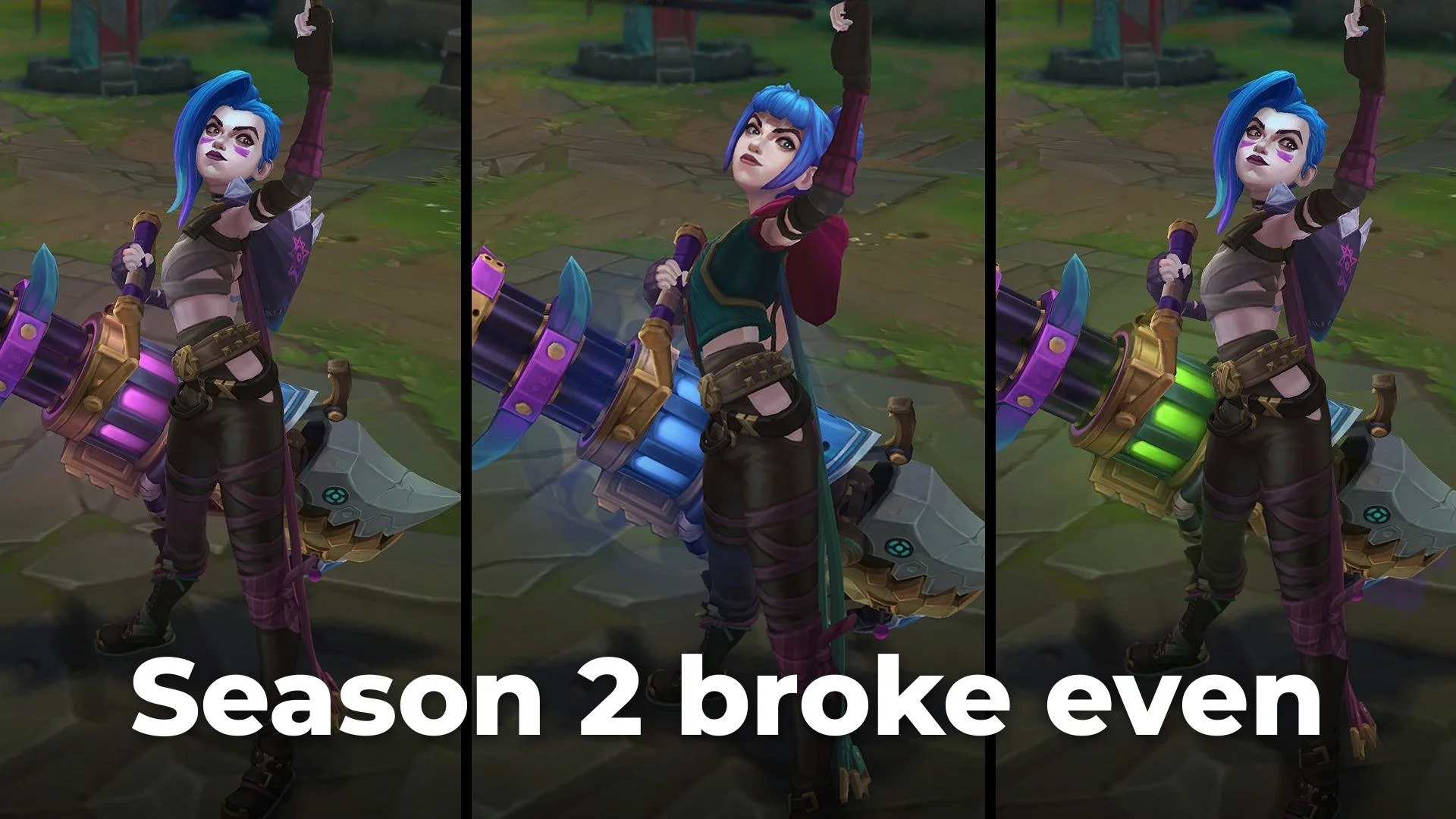
Arcane Jinx in League of Legends. Image: Riot Games
Read more: Transmedia Triumphs and Traps: Lessons from the Convergence of Gaming and Media
2. Riot’s mobile wins run through China, and Valorant Mobile succeeds there with zero loot boxes
“Riot has three of the top 15 mobile games in China”
Fight for the Golden Spatula (TFTish), Wild Rift, and Valorant Mobile are all top 15 mobile games in China. Technically, all three are publishing arrangements with Tencent. Wild Rift is developed and published jointly with a Tencent division. Tencent built and publishes Valorant Mobile and Golden Spatula on Riot’s IP. These arrangements sit apart from licensing, which Riot avoids because “we are the only stewards of our IP that will ever be really happy with how it gets used.”
Mark gave two reasons it works. Tencent has deep mobile publishing capabilities, and “they earn their share of revenue.” Players in China also play hardcore games on mobile, often because they grew up without a PC or console. The gameplay stays “100% the same,” and Valorant Mobile runs with no loot boxes and no pay-to-win. Tencent had questions about that model at first.
“Tencent has realized that our games thrive with the monetization systems that they were built for.” Mark Sottosanti
When I was at Riot, the hard part was getting a company of PC players to see that players around the world love high-quality mobile games. Mark called traditional mobile “the antithesis” of what Riot does well, and credited me and others with helping Riot see that mobile needs its own publishing expertise.
My read: Riot proved two China models work. Joint development works, as Wild Rift shows. So does handing a strong Western game and IP to Tencent to make it specific for China, which is how Golden Spatula and Valorant Mobile found their success. If you hold a strong IP, a publishing partner who adapts your game for China is a real path, as long as you hold the line on gameplay and monetization the way Riot did.
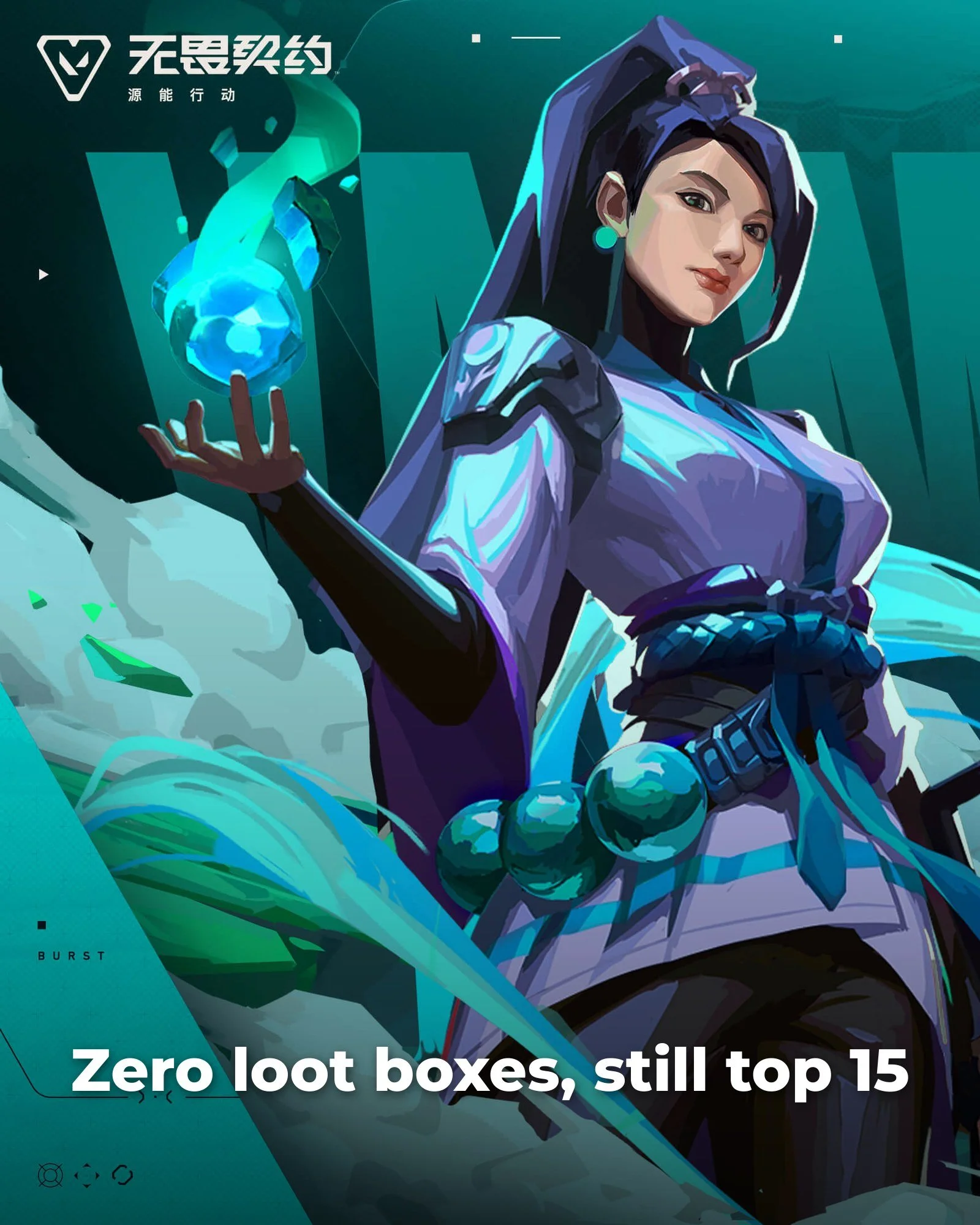
VALORANT Mobile key art (China). Image: Tencent Games / Riot Games
Read more: Does Tencent Hate Riot?
3. Riot has hit on 5 of its 7 launches without shrinking the League's team
Riot ran on one game for 10 years. Every time people started work on a new game, a League crisis or opportunity pulled them back within a few months. Then Riot shipped four games in two years: Valorant, TFT, Wild Rift and Legends of Runeterra. By Mark’s count, five of Riot’s seven launches are hits: League, Valorant, TFT, Wild Rift and Riftbound. Legends of Runeterra and 2XKO missed their goals.
The staffing made the difference. Rioters moved from League to the new games, and Riot backfilled every seat. Mark also rebuilt Riot’s game health and financial health metrics so the company could size investment across a portfolio, and each game shipped on its own timeline.
“We actually didn’t shrink the League team at all at the time, or actually we never have.” Mark Sottosanti
My read: Riot’s hit rate on new games is much higher than I would expect, and higher than I see at other publishers. Riot set up dedicated teams that gave each new game the attention it needed. The reason it worked is that Riot protected the League team. It kept the cash cow running without tapping it for people and hurting its success. If you run one live hit and a pipeline, staff new games with dedicated teams and backfill the live team as people move.
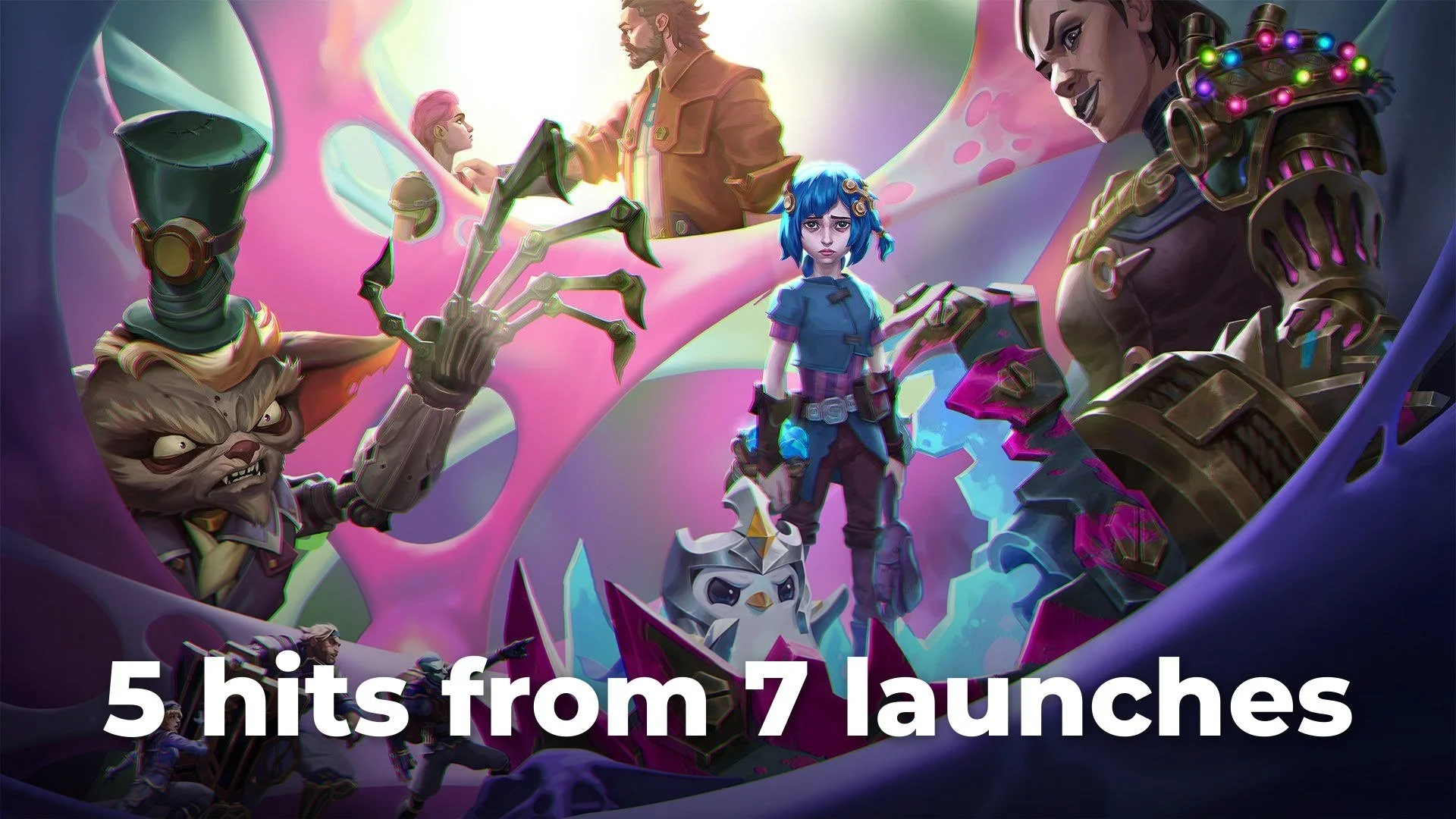
Teamfight Tactics: Into the Arcane. Image: Riot Games
4. China and Korea at 59% of Riot's player spending
Mark looks at Riot’s business as five regions: North America, Europe, China, Korea, and the rest of the world. Revenue has been fairly balanced, with no region above 25% in recent years and the West and Asia close to 50/50. I asked whether China’s numbers included Tencent. Riot ships in China through a separate Tencent publishing division, which keeps the majority of China revenue. Riot books “a healthy minority.”
I wanted a worldwide view of where Riot’s games are most popular, so I ran an estimate. Riot doesn’t disclose its China share, so I’ll assume it keeps 30% and treat each region as a fifth of Riot’s revenue. On that basis, China is about 45% of all player spending on Riot games, and China plus Korea reach about 59%. Korea backs that up on its own.
“Our games account for about 40% of playtime in PC cafes every day.” Mark Sottosanti
My read: these are estimates, and they line up with what many people believe. Riot’s games dominate in China and Korea. Rest of world also holds roughly a fifth of Riot’s booked revenue, level with North America and Europe. Size your markets by where players spend, especially where a partner takes the larger cut.
5. Riot keeps new games secret until they are close to launch
Riot runs several R&D teams on unannounced games across many genres. Mark said Riot stays quiet so that if a game gets scaled down, it hasn’t excited that genre’s players for nothing. Kress pushed for Riot to do more PR. Mark said Riot’s words carry more weight as it grows, and he hopes the next reveal surprises people.
“Hopefully people will be surprised that, ‘Oh, wow, how did they keep that a secret for so long?’” Mark Sottosanti
My read: “Keep it secret, keep it safe” works when the reveal comes with something to do. I worked on L10, Riot’s 10th anniversary in 2019. We announced TFT, Wild Rift and Legends of Runeterra at once and opened preorders the same day, and it drove some of the largest preorder campaigns Google Play had seen at the time. Announce when players can act on it.
Read more: Riot's Runeterra Declares War Against Blizzard's Hearthstone
6. Riot uses AI for cheat detection, bots and balance testing, and keeps humans at the center of its games
Mark described Riot’s AI work as exploratory. Teams use it to build more realistic bots, scan chat logs and behavior patterns to catch cheaters and toxic players, and simulate gameplay so new content ships balanced. Mark uses it himself to analyze the business. Riot encourages teams to explore it and forces it on no one. I asked about the backlash against AI in the West. Mark pointed to protecting artists and developers, and to Steam releasing 20,000 games a year, which he expects to push players toward games made by people.
“Riot’s always been successful because of its people, and that’s not gonna change.” Mark Sottosanti
My read: a balanced approach makes the most sense for companies right now. Use AI where it clears low value work and protects players from cheaters, and keep people at the center of what players see.
7. The biggest game companies are talent magnets right now
Mark described an industry hangover after the pandemic. Player engagement and spending have held steady and growth has slowed. New games have a harder time breaking through, and many studios have closed or shrunk.
“External funding for new games and startups has declined pretty dramatically, and that’s unlikely to change anytime soon.” Mark Sottosanti
Riot is hiring, including many former Rioters who left to start companies during the VC boom and have come back. I called them boomerangs on air. Kress made the bigger point: the large publishers sit in the driver’s seat on staffing.
My read: Kress is right. Consolidation and tight funding for new games give the biggest companies the upper hand on talent. If you lead a large studio, this is the moment to hire.
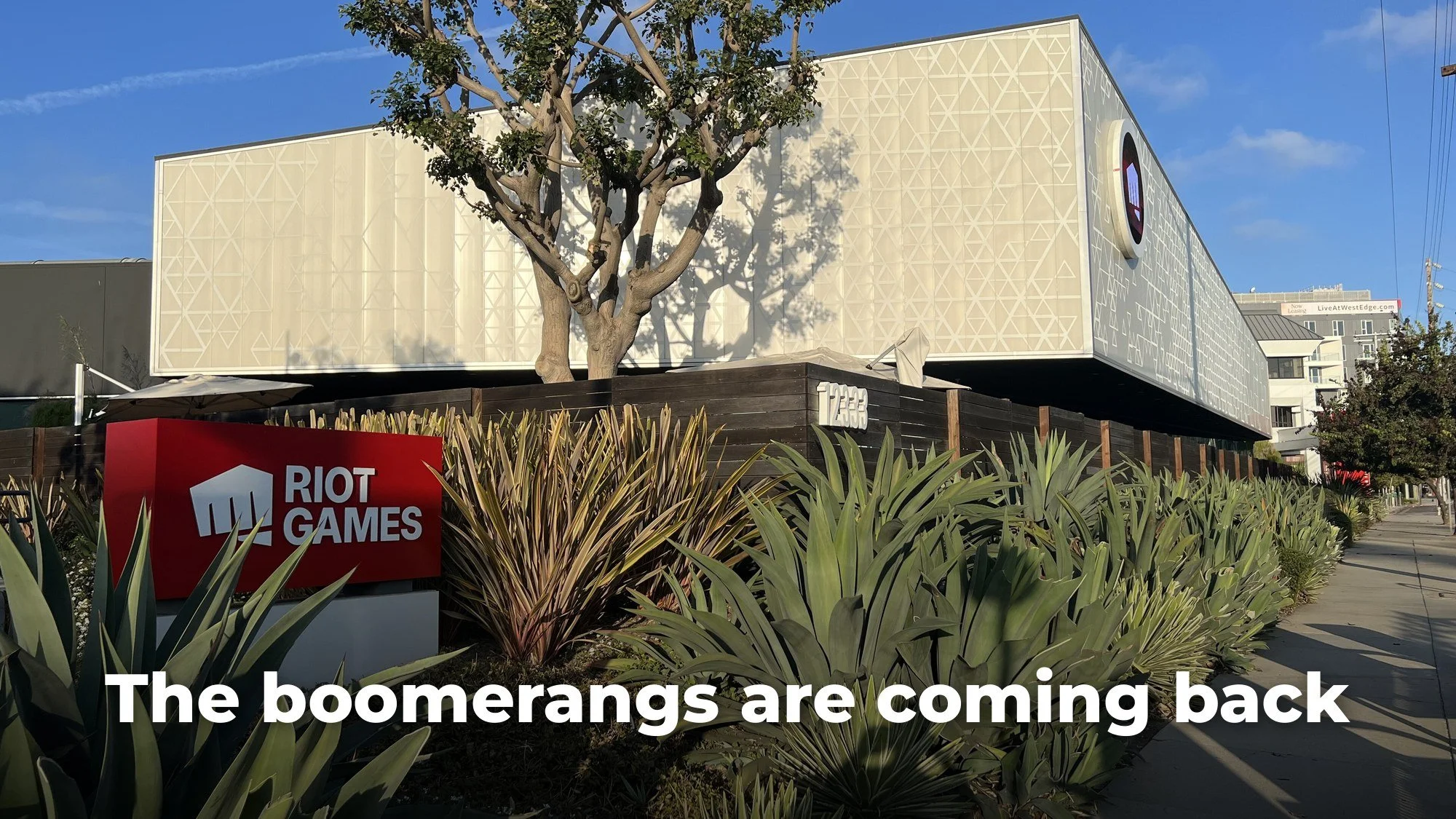
Riot Games HQ, Los Angeles. Photo: Deedman22, CC0, via Wikimedia Commons
Financial health is a means to an end at Riot
Every lesson here comes back to one idea Mark gave as his advice to other CFOs. Financial health is “a means to an end,” the thing that lets teams “invest and be creative and dream and make big bets.” Riot sets break-even as the bar for Arcane, protects the game that pays for everything, lets Tencent do what Tencent does best in China, and keeps quiet until a game is ready. Mark added that “failure is to be learned from,” and Runeterra and 2XKO sit in the record next to five hits.
If you run a studio, protect your core game’s team while new bets get dedicated teams of their own. If you run finance, measure transmedia and brand spend the way Riot measures Arcane. If you hold strong IP, a partner who adapts your game for China can turn it into a top mobile title.
Mark joined Riot because he played League with his son. Fourteen years later, his retirement plan depends on Riot’s next game. “My retirement dream is to be a guild leader in that MMO,” he said, “and so I can’t retire until it comes out.”
Full conversation with Riot Games' Mark Sottosanti: Apple / Spotify / YouTube
Enjoyed this? Get the next one in your inbox. Subscribe to the Deconstructor of Fun newsletter.